Can "minds stolen by algorithms" be recovered?
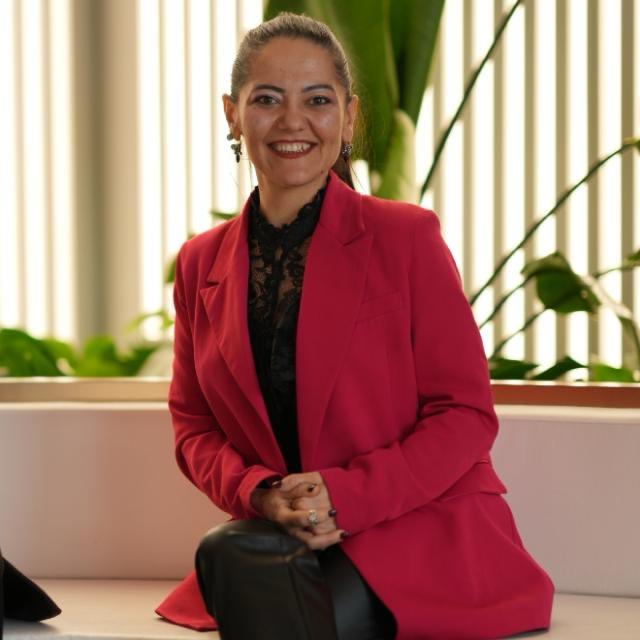
Prof. Dr. Başak Gezmen, faculty member at Istanbul Medipol University, stated that digitalization has reshaped communication, creating “communication fatigue” and “information burnout” in individuals due to the overwhelming flow of information.

Days interrupted by notifications, disappearing attention spans, and an endless stream of information... Protecting our minds in the digital age has become harder than ever. But in a world governed by algorithms, is it possible to recover our “stolen minds”?
Prof. Dr. Başak Gezmen from the Faculty of Communication at Istanbul Medipol University explained that digitalization has reshaped communication, causing “communication fatigue” and “information burnout” among individuals. In her remarks to Anadolu Agency, Gezmen stated that the digital age has fundamentally transformed not only how people communicate but also their attention spans. She emphasized that digitalization has turned individuals from passive information receivers into active content producers, weakening sincerity in communication.
Recalling that in the past, people expressed their emotions sincerely through letters, Gezmen noted that now these emotions are often conveyed through a few emojis. According to her, this shift weakens the warmth and authenticity of communication.
"CONSTANT EXPOSURE INCREASES MENTAL FATIGUE"
Prof. Gezmen pointed out that individuals today are exposed to hundreds of media contents every day, leading to “mental overload.” She explained that constant notifications and multiple screens keep people on alert, resulting in concentration difficulties, forgetfulness, and decision-making problems.
Sharing striking data during the interview, Gezmen noted that research shows a person checks their phone an average of 78 times a day, and most individuals look at their screens within the first 15 minutes after waking up. She emphasized that because of such habits, the brain struggles to cope with the intense flow of information: “When the brain is exposed to more information than it can handle, it has difficulty distinguishing which information is important.” she said, adding that this weakens critical thinking skills.
“DIGITAL DETOX IS ESSENTIAL FOR MENTAL BALANCE”
Highlighting the importance of “digital detox” and “digital minimalism” to prevent digital addiction, Gezmen emphasized that individuals should stay away from their devices periodically.
“It’s not possible to completely disconnect from technology.” Gezmen said, “but it is possible to know how much and for what purpose we use it. Digital minimalism helps us build this awareness.” She added that turning off unnecessary notifications, tracking screen time, and maintaining contact with nature are important for protecting mental balance.
"WE FACE ATTENTION SCARCITY IN AGE OF INFORMATION ABUNDANCE"
Gezmen stated that attention has become an economic value in today’s world: “We are now experiencing attention scarcity in an age of information abundance.” she said. She explained that social media platforms offer personalized content to keep users engaged, giving rise to what is called the “attention economy.”
By producing content that targets users’ emotional reactions, these platforms encourage superficial information consumption. “Amid this bombardment of information, we lose our critical perspective.” Gezmen said.
She concluded by emphasizing the need to strengthen media literacy in the digital world: “As long as we can preserve the habit of critical thinking, we can protect our minds in this crowd of information.”
Last Update : 05/06/2026 - 14:24