Dr. Byrne’s discovery with the potential to shape cancer treatment received USPTO patent
A discovery developed by Dr. Yasemin Yozgat Byrne, Faculty Member at the Istanbul Medipol University International School of Medicine, which may contribute to predicting treatment response, resistance development, and the identification of new targeted therapies in cancer, has been patented and officially registered by the United States Patent and Trademark Office (USPTO).
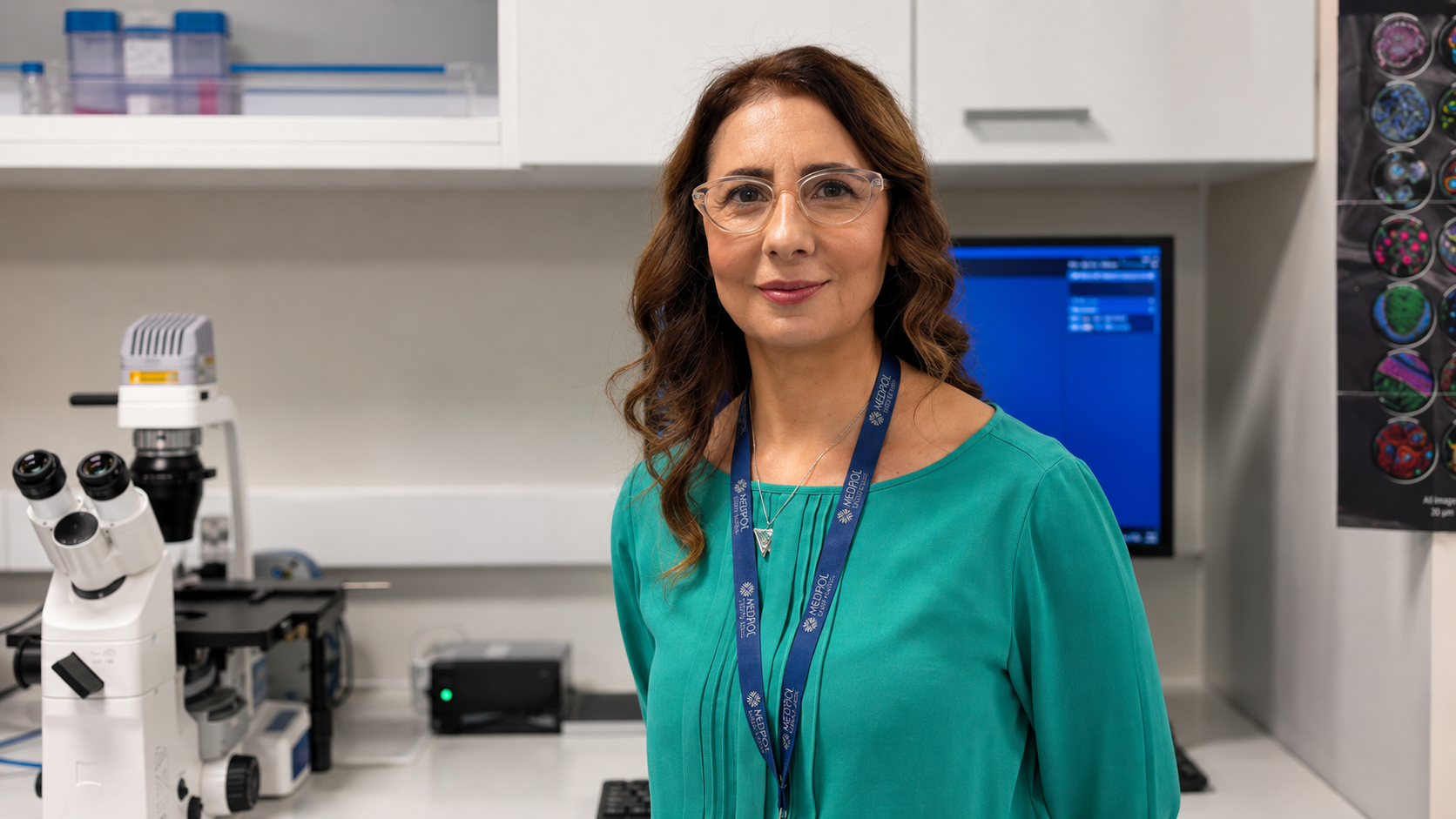
The invention developed by Dr. Yasemin Yozgat Byrne, Faculty Member at the Istanbul Medipol University International School of Medicine, has been patented and officially registered by the United States Patent and Trademark Office (USPTO).
The patent, titled “Hexokinase 1 Isoform B for Use as a Prognosis Marker and Specific Target Against Cancer” and filed under application number US 17/597,743, focuses on the HK1b isoform, which is generated through alternative splicing of the HK1 gene that regulates energy production in cancer cells, as well as the HK1b protein produced from this isoform.
Research conducted within the scope of the patent demonstrates that HK1b is not merely a biological alteration observed in cancer cells; it is also a molecular indicator capable of providing information about disease progression, treatment response, and the development of resistance. By defining HK1b as a targetable structure, the invention provides a scientific foundation for personalized cancer therapies, artificial intelligence-assisted resistance prediction, and the development of novel targeted treatments.
CONTRIBUTING TO PERSONALIZED TREATMENT APPROACHES
The invention developed by Dr. Yasemin Yozgat Byrne and her team reveals the relationship between HK1b levels and tumor behavior. Findings obtained within the scope of the patent are expected to contribute to predicting patients’ responses to treatment and the potential development of treatment resistance.
The study is also expected to support more accurate patient stratification based on molecular characteristics and facilitate the development of personalized treatment approaches in the future.
PROVIDING A SCIENTIFIC FOUNDATION FOR ARTIFICIAL INTELLIGENCE-SUPPORTED RESEARCH
One of the most notable aspects of the patent is the scientific infrastructure it provides for artificial intelligence-based cancer research. The research team aims to develop artificial intelligence systems that integrate genomic, proteomic, metabolomic, imaging, and clinical data to predict which patients may develop treatment resistance before therapy even begins.
This approach is expected to contribute to the development of AI-assisted decision-support systems capable of identifying the most appropriate treatment for individual patients.
GUIDING THE DEVELOPMENT OF NEW CANCER THERAPIES
The HK1b target identified within the scope of the patent also holds significant potential for new drug development efforts. Researchers continue to work on novel therapeutic strategies that target this mechanism, which regulates the energy metabolism of cancer cells, with the aim of halting tumor growth and reducing resistance to existing treatments.
Should these efforts prove successful, they may enable not only earlier and more accurate assessment of cancer but also the development of next-generation targeted therapies.
AN INTERNATIONAL SCIENTIFIC AND TECHNOLOGICAL ACHIEVEMENT
The patent granted by the United States Patent and Trademark Office demonstrates that the invention has successfully passed the rigorous scientific and technological evaluations conducted by one of the world’s leading intellectual property protection systems.
This patent achievement highlights the international visibility of Istanbul Medipol University’s research in cancer biology, translational medicine, artificial intelligence, and precision medicine, while also underscoring the potential of scientific knowledge produced in Türkiye to be transformed into global healthcare technologies.
The studies led by Dr. Yasemin Yozgat Byrne aim to contribute to more accurate patient selection in cancer treatment, the prediction of treatment resistance, artificial intelligence-assisted personalized medicine applications, and the development of novel therapeutic agents.
Last Update : 16/06/2026 - 16:41