A new method against health-threatening residues in honey
Asst. Prof. Ümit Can Erim, a faculty member at the Faculty of Pharmacy of Istanbul Medipol University, has developed an innovative analytical method that enables the detection of antibiotic residues in honey, potentially harmful to human health, at very low levels without causing environmental damage. Erim’s study was published in Food Chemistry, a journal ranked in the top ten percent of its field.
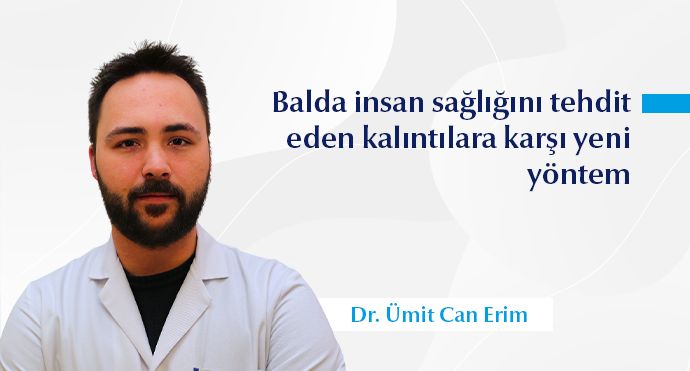
Asst. Prof. Ümit Can Erim from the Faculty of Pharmacy at Istanbul Medipol University developed an environmentally friendly and innovative analytical method to address food safety risks arising from the contamination of honey with certain antibiotics used in beekeeping in recent years. The method focuses on the detection of antibiotic residues in honey with high sensitivity and reliability.
Erim’s study, titled “Environmentally friendly determination of sulfonamides in honey samples: Hydrophobic natural deep eutectic solvent-based microextraction prior to high-performance liquid chromatography by matrix matching calibration techniques”was published in the journal Food Chemistry.
A NEW SCIENTIFIC STEP AGAINST HIDDEN RISKS IN HONEY
The research primarily focuses on two antibiotics, sulfadiazine and sulfamethoxazole, which are occasionally detected in honey samples. When used in beekeeping, these substances can pose risks to human health if ingested in an uncontrolled and prolonged manner, potentially leading to adverse effects on the immune system, allergic reactions, and, in some cases, more serious long-term health problems. Erim’s study aims to enable the rapid, reliable, and sensitive detection of these antibiotics in honey.
The developed method offers a practical solution for food inspections, both by reducing analysis time and enabling implementation at a lower cost. Particularly when considered from the perspective of food laboratories conducting routine checks, this study presents a robust model that could serve as an alternative to existing methods.
NATURAL COMPONENTS WERE USED INSTEAD OF HARMFUL CHEMICALS
One of the most notable aspects of the study is the environmentally friendly nature of the analytical process. Instead of the chemical solvents commonly used in conventional methods which may be harmful to the environment, Erim utilized solvents derived from natural components. These solvents were prepared by combining thymol, a plant-derived compound, with acetic acid.
As a result, antibiotic residues were separated from honey in a safer and more effective manner, while the number of hazardous solvents used in laboratory settings was significantly reduced. Thus, the study not only achieved analytical success but also introduced a more sustainable approach in terms of environmental and human health.
VALIDATED ON REAL HONEY SAMPLES
The study went beyond a theoretical framework and tested the method on real honey samples. Honey obtained from two different regions of Türkiye, Artvin and Kırklareli, was analysed to assess the reliability of the method under practical conditions. The results demonstrated that the developed method could recover antibiotics with high accuracy and that the measurements were largely consistent.
These findings indicate that the method can be safely applied not only in laboratory environments but also to real-market products.
ANTIBIOTIC MONITORING IN HONEY FOR CONSUMER HEALTH STRENGTHENED
The most significant outcome of the research is the scientific demonstration that antibiotic residues in a widely consumed food such as honey can be detected at very low levels without causing environmental harm. The developed method offers not only an academic contribution but also a directly applicable solution for food inspection authorities, laboratories, and consumer health protection.
This makes it possible for consumers to access safer food, control mechanisms to work more effectively, and more environmentally friendly practices to become widespread in laboratories. Erim's work is considered an important milestone in terms of both food safety and sustainable science.
Last Update : 05/06/2026 - 11:57