As digital visibility increases violence becomes normalized
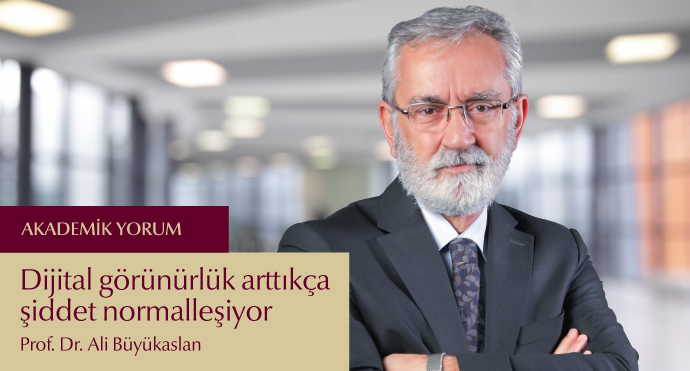
In the digital world, the desire to “be visible”, “gain likes” and “achieve status” is transforming violence into a display of power among young people. Prof. Ali Büyükaslan, Dean of the School of Communication at Istanbul Medipol University, described this process driven by algorithms as the “transfer of virtual identities into real life”, drawing attention to a dangerous cycle in which violence is increasingly normalized.
An identity constructed on screen can quickly find its counterpart in real life. The desire to be visible, accepted, and appear “powerful” within virtual groups can push some young individuals to adopt violence as a tool. The tendency for behaviors applauded in digital environments to be replicated in real life creates a hazardous cycle. Recent armed attacks in schools in Şanlıurfa and Kahramanmaraş have once again brought the impact of digital platforms on children and youth into public debate. These developments have also intensified warnings regarding the influence of digital media on younger generations.
In his evaluation to Anadolu Agency, Prof. Ali Büyükaslan, Dean of the School of Communication at Istanbul Medipol University, stated that uncontrolled groups formed on digital platforms create a foundation for violence to be perceived as a “status symbol” among young people. Emphasizing that identities constructed in virtual environments carry serious risks when transferred into real life, Büyükaslan noted that individuals, particularly during adolescence, tend to translate their digital interactions into their everyday lives.
“AS VIOLENCE BECOMES MORE VISIBLE, IMITATION INCREASES”
Highlighting the risks associated with the visibility of violence in digital environments, Büyükaslan stated: “The possibility that all forms of violence may be perceived as encouraging should not be overlooked. The effort to make the first post and present the most impactful content can lead to imitation, particularly among younger age groups.”
He further emphasized that content presented in digital media is often associated with concepts such as “heroism” and “power” which may lead young people to perceive violence as a means of success or attracting attention. Büyükaslan expressed this concern as follows: “Repeated exposure to such content creates a foundation for the normalization of these behaviors.”
“DIGITAL ENVIRONMENTS ARE NOT MERELY SPACES FOR ENTERTAINMENT”
Stating that digital platforms are not merely spaces of entertainment, Büyükaslan noted that they have become environments where identities are constructed and role models are formed.
“Children and young people may, often unknowingly, be drawn into a form of dependency in these environments. The rules of the digital world gradually begin to be perceived as the rules of real life.” he said, adding that this phenomenon becomes particularly pronounced during adolescence.
Drawing attention to the deepening influence of digital platforms, Büyükaslan further explained: “The most significant characteristic of digital platforms is their absolute influence. Children and young people in these environments, often without realizing it, enter into a state of dependency, effectively confining themselves behind digital iron bars.”
“ALGORITHMS IMPOSE BEHAVIORAL PATTERNS”
Büyükaslan underlined the powerful influence of algorithms on users, noting that the content presented gradually evolves into behavioral patterns for individuals.
Regarding the impact of algorithms, he stated: “The modes of thought and behavior offered by algorithms become almost compulsory for users. This leads individuals to be continuously exposed to the same content and to adopt similar behaviors.”
He also emphasized that this dynamic limits individuals’ access to diverse perspectives and may weaken critical thinking skills, noting that this aspect of digital environments requires careful consideration, particularly for young people.
“A MULTIFACETED RESPONSE IS ESSENTIAL”
Emphasizing that the issue cannot be resolved solely through security measures, Büyükaslan stated that families, educators, policymakers, and all relevant stakeholders must act collectively.
“We must raise our children not only physically, but also mentally, as more conscious, self-confident, and healthy individuals.” Büyükaslan concluded, underscoring the importance of implementing long-term and comprehensive policies to prevent the recurrence of such incidents.
The full news article was published by Anadolu Agency, click to read.
Last Update Date: 06/05/2026 - 10:17