
Sleep apnea manifests differently in women: Diagnosis is often delayed, and disease burden is heavier
A nationwide Turkish study, the TURKAPNE Project, involving Prof. Dr. Muhammed Emin Akkoyunlu from Istanbul Medipol University, has revealed significant differences between men and women in the symptoms, severity, and associated conditions of obstructive sleep apnea (OSA). According to the findings, the disease tends to appear in women at an older age, with more comorbidities and different symptoms.
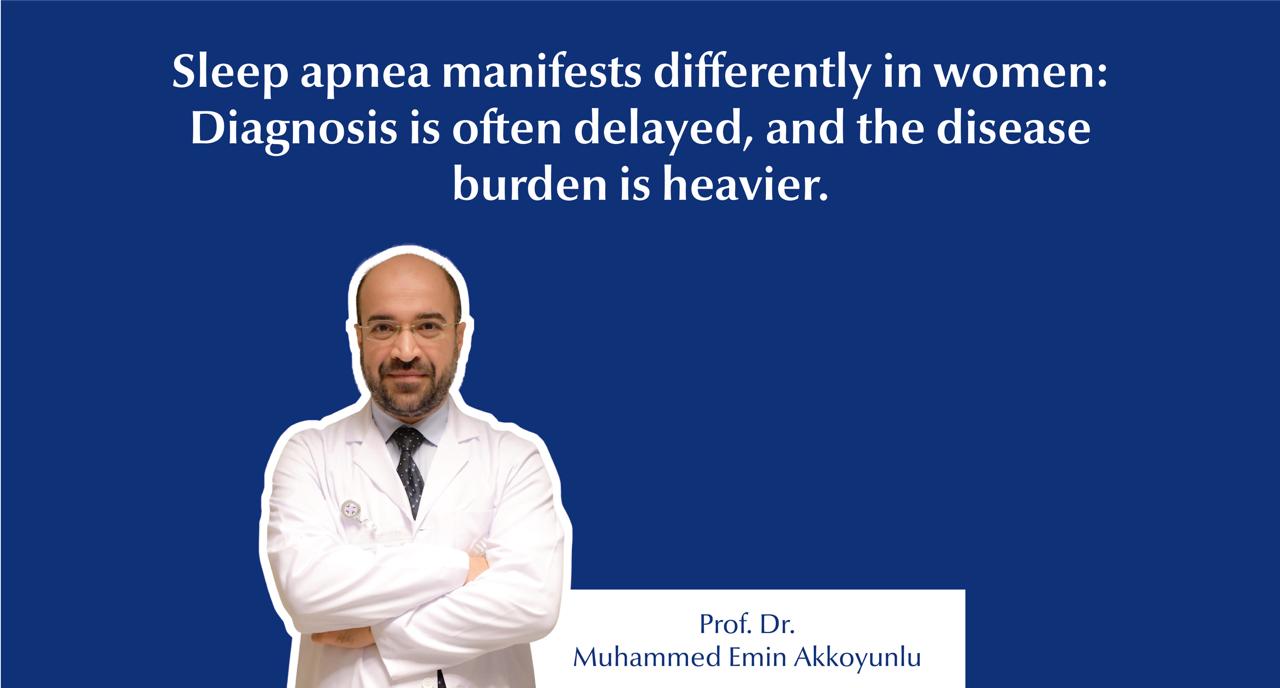
The study, titled “Sex differences in clinical and polysomnographic features of obstructive sleep apnea: The Turkish sleep apnea database (TURKAPNE) cohort,” was published in the journal Sleep Medicine. It was conducted with the participation of researchers from 34 centers across Türkiye, including Prof. Dr. Muhammed Emin Akkoyunlu from the Faculty of Medicine at Istanbul Medipol University.
Analyzing data from over 7,000 adult patients across 34 provinces, the study found striking differences in the clinical presentation and severity of OSA between men and women. The results show that women are generally diagnosed at an older age, experience more accompanying health problems, and report more pronounced symptoms. However, the overall severity of the disease appears to be milder compared to men.
MENOPAUSE DOUBLES THE RISK OF SLEEP APNEA IN WOMEN
Although obstructive sleep apnea has long been considered a “male disease,” the research shows it is also common among women yet frequently goes undiagnosed. According to TURKAPNE data, female patients receive an OSA diagnosis at an average age of 56, compared to 49 in men.
Women were found to have higher rates of obesity, diabetes, hypertension, asthma, depression, and thyroid disorders.
While men more commonly present with classic symptoms such as loud snoring and breathing pauses, women tend to seek medical help for insomnia, headaches, lack of concentration, and depressive mood.
The research team also found that menopause significantly increases the risk of sleep apnea in women. After menopause, the apnea–hypopnea index (AHI) which measures breathing interruptions during sleep was found to double, indicating more frequent episodes of breathing cessation. This is thought to result from hormonal changes and a reduction in upper airway muscle tone.
SYMPTOMS PRESENT DIFFERENTLY IN WOMEN
The study identified that hypertension, diabetes, asthma, psychiatric disorders, and hypothyroidism were more common among female patients than males.
These findings suggest that sleep apnea in women represents a more complex condition that not only disrupts sleep but also affects metabolic, hormonal, and cardiovascular systems. Women’s higher medication use also supports the heavier comorbidity burden observed in the study.
Moreover, women were found to have shorter total sleep time, longer sleep onset latency, and lower sleep efficiency compared to men. These results indicate poorer sleep quality and a mutually reinforcing pattern of sleep disturbances among women.
PROF. DR. AKKOYUNLU: DIAGNOSIS IS OFTEN DELAYED IN WOMEN, AND THE DISEASE BURDEN IS HEAVIER
Prof. Dr. Muhammed Emin Akkoyunlu, one of the study’s principal investigators from Istanbul Medipol University Faculty of Medicine, emphasized that the findings could raise awareness both in Türkiye and internationally:
“Sleep apnea is often perceived as a male disease, leading to delayed diagnosis in women. However, our study revealed that women actually experience more symptoms, more comorbidities, and a lower quality of life. Yet many female patients are overlooked because their AHI values in the classical diagnostic criterion are lower despite significant disease burden.”
Prof. Akkoyunlu highlighted the need to consider new diagnostic metrics, such as hypoxic load, heart rate variability, and arousal threshold, in future diagnostic processes, rather than relying solely on AHI scores.
GENDER-SENSITIVE APPROACHES NEEDED IN DIAGNOSIS AND TREATMENT
The findings strongly indicate the need to account for sex-based differences in the diagnosis and treatment of sleep apnea. Since women often present with atypical symptoms, traditional diagnostic tests should be re-evaluated.
Experts suggest that such studies can help improve early diagnosis rates in women and lead to the development of personalized treatment models for sleep disorders.
CONTRIBUTION FROM A NATIONAL DATABASE TO GLOBAL SCIENTIFIC LITERATURE
Launched in 2017, the TURKAPNE Project is the first national database in Türkiye to collect sleep apnea data through a centralized system. It compiles demographic information, polysomnography results, lifestyle data, and comorbid conditions from patients across the country. The data obtained are expected to both increase awareness of sleep apnea in Türkiye and contribute significantly to international scientific literature.
Last Update : 05/06/2026 - 11:50