War, migration and dignity: The enduring story of Şefika Ortaylı
A life shaped by revolution in Crimea, the devastation of war in Stalingrad, years of exile in Austria, and a new beginning built through scholarship in Ankara... The remarkable life story of Şefika Ortaylı, spanning nearly a century, was shared with audiences during a talk held at Istanbul Medipol University.
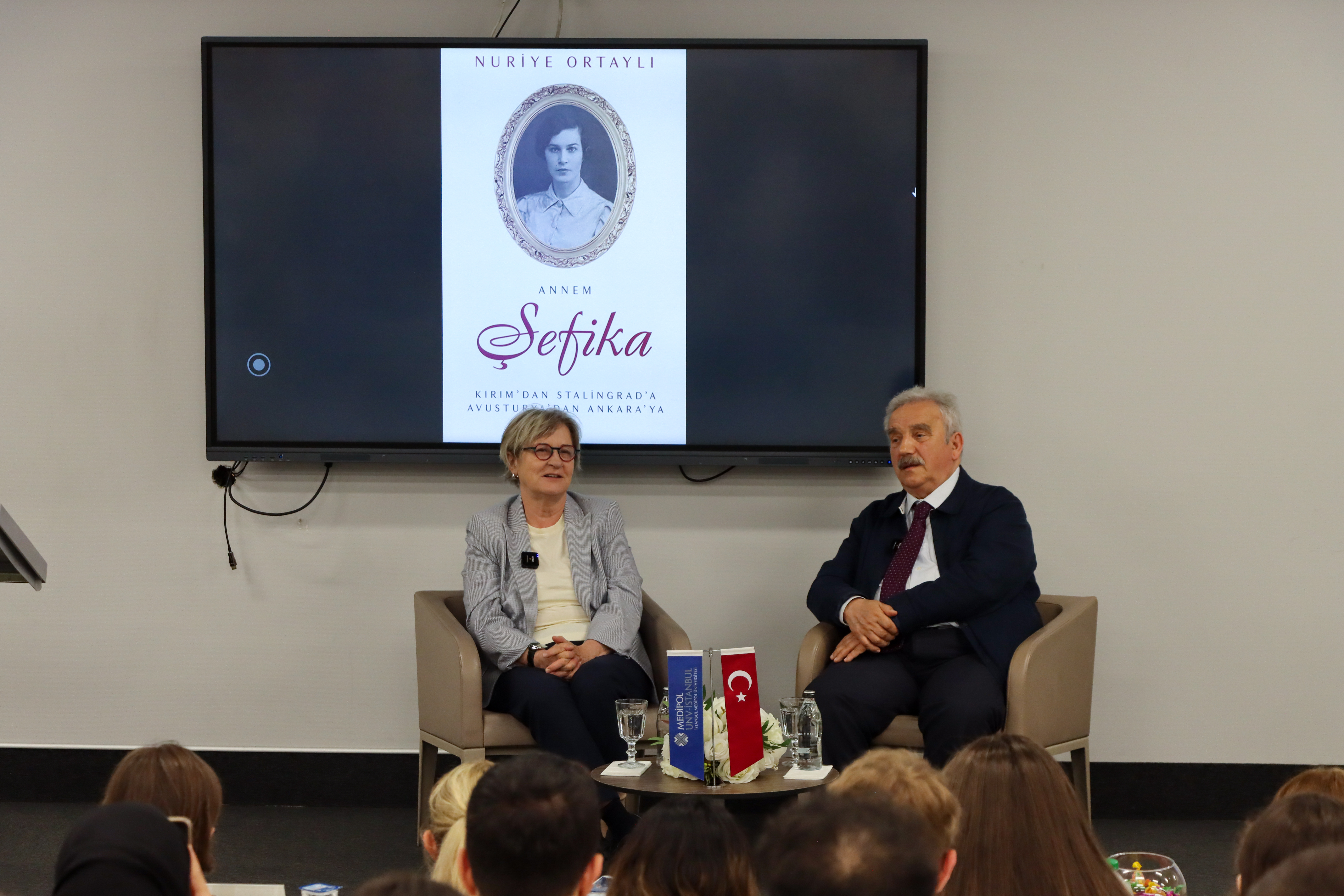
Istanbul Medipol University’s South Campus hosted an extraordinary story that began in Crimea, passed through the war years in Stalingrad and the hardships of immigrant life in Austria and ultimately culminated in a life rebuilt through learning and perseverance in Ankara. During a talk and book-signing event, Nuriye Ortaylı recounted the life story of her mother, Şefika Ortaylı, through her book Annem Şefika: From Crimea to Stalingrad, From Austria to Ankara. The program explored Şefika Ortaylı’s life, shaped by wars, migration, and hardship, not merely as the memory of a mother or a family, but as the struggle of a woman who endured revolutions, wars, exile, and deprivation while preserving her dignity and resilience.
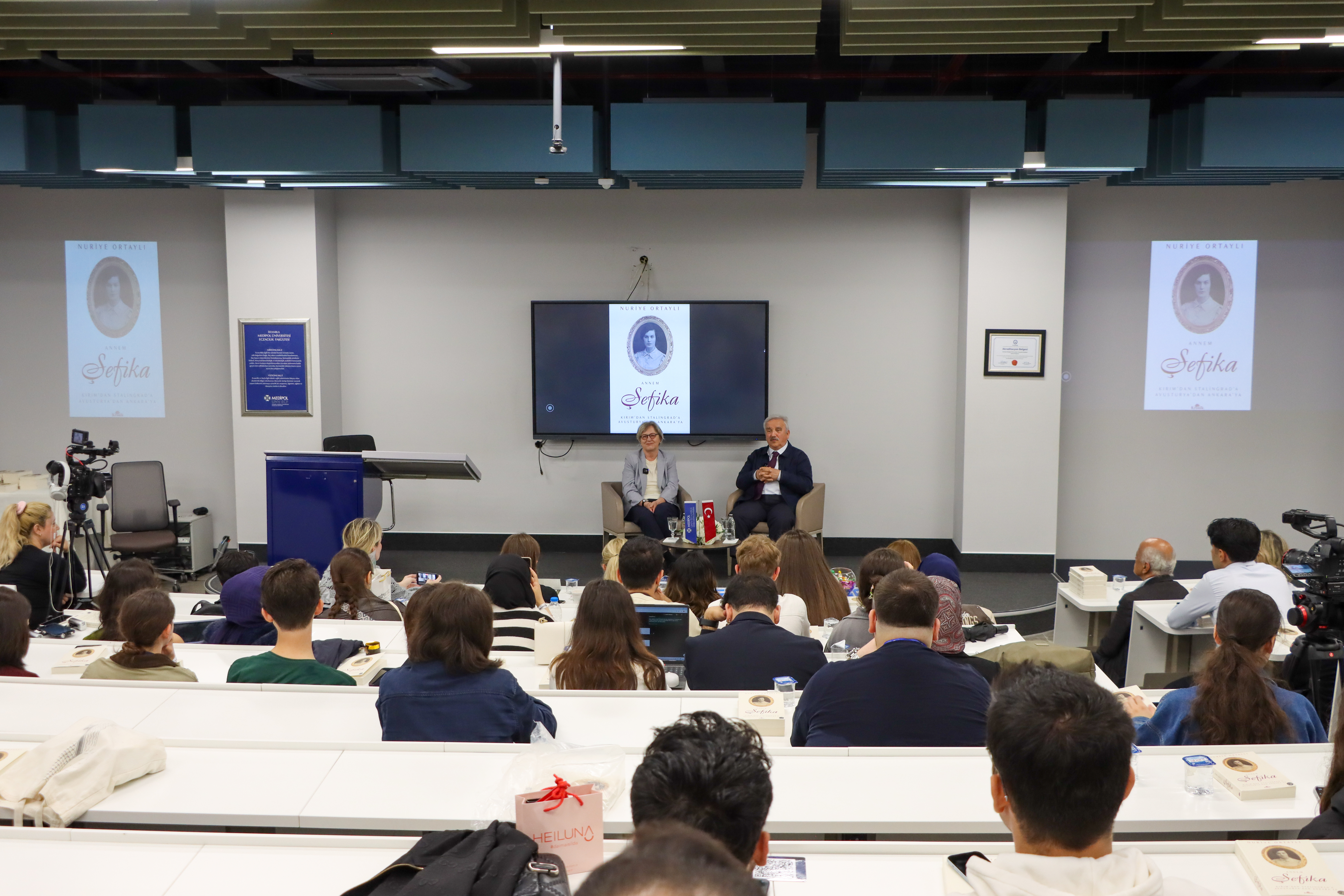
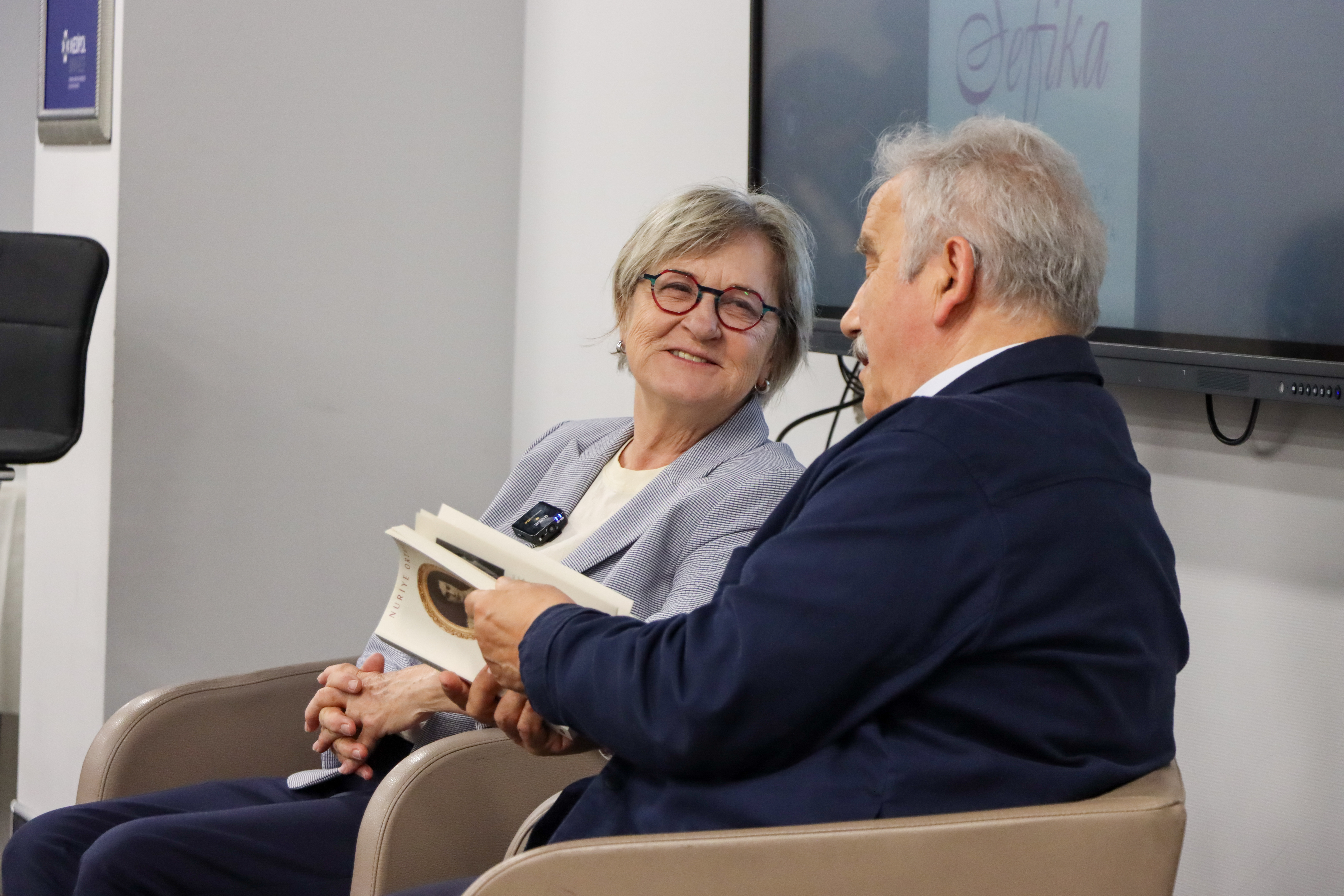
Prof. Mehmet İpşirli, a faculty member of the School of Humanities and Social Sciences at Istanbul Medipol University and moderator of the event, stated that Şefika Ortaylı’s life offers important lessons for younger generations. Emphasizing that success is not always achieved under comfortable circumstances, İpşirli remarked:
“Their circumstances were far more difficult than ours; nevertheless, they achieved remarkable success and secured their rightful place in history. For this reason, we should read such works and draw inspiration from them.”
“MY MOTHER LIVED THROUGH DIFFICULT TIMES”
Speaking about her mother’s life during the event, Nuriye Ortaylı stated that Şefika Ortaylı was born in Crimea on October 10, 1917. She explained that her mother was born during a period of profound social upheaval in Russia and noted that following the February Revolution, the country was engulfed by war, famine, and political uncertainty.
Ortaylı explained that her mother belonged to a Crimean Tatar Muslim family and also came from an aristocratic background. However, following the October Revolution, the family lost all of its privileges, lands, homes, and personal possessions. Ortaylı stated:
“My mother was born into a social class that the new regime regarded as an enemy. Overnight, her family became one of the most vulnerable segments of society.”
A LIFE IN THE MIDST OF WAR IN STALINGRAD
Nuriye Ortaylı explained that her family later moved to Stalingrad, where her mother witnessed one of the most devastating fronts of the Second World War. She noted that Stalingrad was one of the cities that changed the course of the war and emphasized that civilians were also targeted during the German bombardment.
Ortaylı stated that Stalingrad, then an industrial city with a population of approximately 600,000, was subjected to relentless attacks and that tens of thousands of people lost their lives during the bombings. Explaining that Şefika Ortaylı lived amid this devastation, Nuriye Ortaylı added that civilians who remained behind during the war were transported to Germany and Poland as forced labourers.
“THE GREATEST CHALLENGE OF MIGRATION IS NOT KNOWING PEOPLE OR INSTITUTIONS”
Nuriye Ortaylı stated that after the war, Şefika Ortaylı came to Türkiye and experienced a difficult immigrant life in Ankara. She explained that the family initially knew no one and endured significant hardships during their first years in the country.
Emphasizing that migration cannot be explained solely through material deprivation, Ortaylı stated:
“Migration is extremely difficult. The greatest challenge is not merely a lack of money, it is not knowing people and not understanding institutions.”
Ortaylı explained that during the early years the family received assistance from the United Nations Relief and Rehabilitation Administration (UNRRA) and that upon arriving in Ankara they were accommodated in a poor-quality hotel. She noted that her father eventually found employment as a foreman at Ana Tamir thanks to his engineering education and proficiency in German, and that the family worked tirelessly for many years to build a stable life.
ŞEFİKA ORTAYLI’S JOURNEY TO ACADEMIA
Nuriye Ortaylı stated that after arriving in Türkiye, her mother concealed the fact that she spoke Russian for many years. She explained that during the Cold War period, those who knew Russian were often suspected of being communists, and therefore her mother was unable to make use of her knowledge for a long time. Describing how her mother’s educational background was later discovered by chance, Ortaylı explained that Şefika Ortaylı began working at the Faculty of Language, History and Geography in 1955. Highlighting her mother’s contributions to Russian language education, Ortaylı stated:
“At that time there was no internet, no audio recordings, and no video materials. The only Russian voice students ever heard was my mother’s voice.”
CHILDHOOD MEMORIES WITH İLBER ORTAYLI
During the event, Nuriye Ortaylı also shared memories from her own childhood. She explained that she was the only daughter born after three sons and that there was a significant age difference between her and her older brothers. She noted that İlber Ortaylı showed a great deal of interest in her during her childhood and recalled with particular fondness their visits to Ankara Castle and Gordion.
Ortaylı explained that during a visit to Gordion, İlber Ortaylı told her about Alexander the Great and the Gordian Knot, a story she has never forgotten. She noted that even as a child, her brother was deeply interested in history and enjoyed sharing what he learned with others.
“THE IDEA FOR THE BOOK EMERGED DURING THE SYRIAN CIVIL WAR”
Nuriye Ortaylı stated that the idea for writing "Annem Şefika" began to take shape between 2014 and 2015. She explained that she was deeply affected by the Syrian Civil War and the experiences of refugees arriving in Türkiye and came to realize that her mother’s story was not solely her family’s story.
Ortaylı stated:
“I thought that perhaps looking back at those days might help us better understand the present.”
She explained that before writing the book, she discussed the idea with İlber Ortaylı and her other brothers. Emphasizing that sharing a private life carries significant responsibility, Ortaylı stated that she feared doing injustice to her mother’s memory.
“BEING STRONG DOES NOT MEAN EXERCISING POWER OVER OTHERS”
Speaking about Şefika Ortaylı’s character and approach to motherhood, Nuriye Ortaylı described her mother as disciplined yet tolerant. She explained that her mother was most disturbed by dishonesty and by the mocking of vulnerable individuals and that she instilled self-confidence in her children.
Addressing the concept of a strong woman, Ortaylı stated that strength does not mean establishing dominance over others. She remarked:
“To be strong means being able to endure hardship and suffering while preserving one’s dignity.”
“PARENTS ARE A CHILD’S FIRST ROLE MODELS”
Responding to questions about academic achievement within the family, Nuriye Ortaylı explained that in an immigrant family, children were made to feel that education was their only path forward. She noted that books, learning, and intellectual curiosity were always present in the household and emphasized that parents serve as a child’s first and most influential role models.
She stated:
“If you want your child to visit museums, you should visit museums yourself. If you want your child to be interested in music, you should be interested in music yourself.”
PROF. İPŞİRLİ: THIS LIFE STORY OFFERS LESSONS FOR ALL OF US
In his closing remarks, Prof. Mehmet İpşirli stated that Şefika Ortaylı’s life was not merely a family story but one that offered important lessons about war, migration, education, hard work, and dignity.
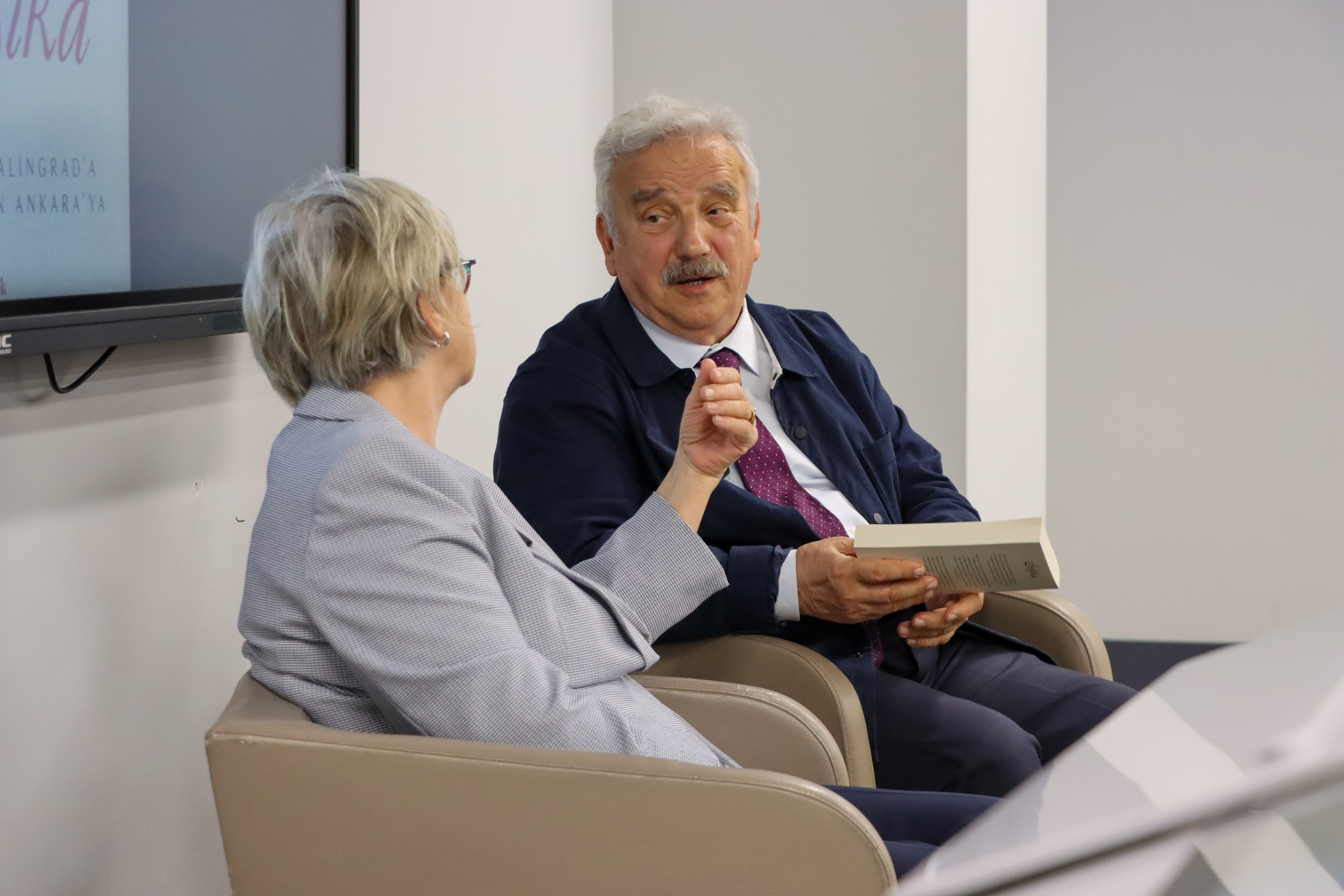
Drawing attention to the historical and cultural ties between Türkiye and the former Ottoman territories, İpşirli emphasized the importance of the bonds connecting Rumelia, Crimea, the Iraqi Turkmens, and the Turkmens of Aleppo. Through Şefika Ortaylı’s life story, the event provided a powerful perspective linking the past to the present.
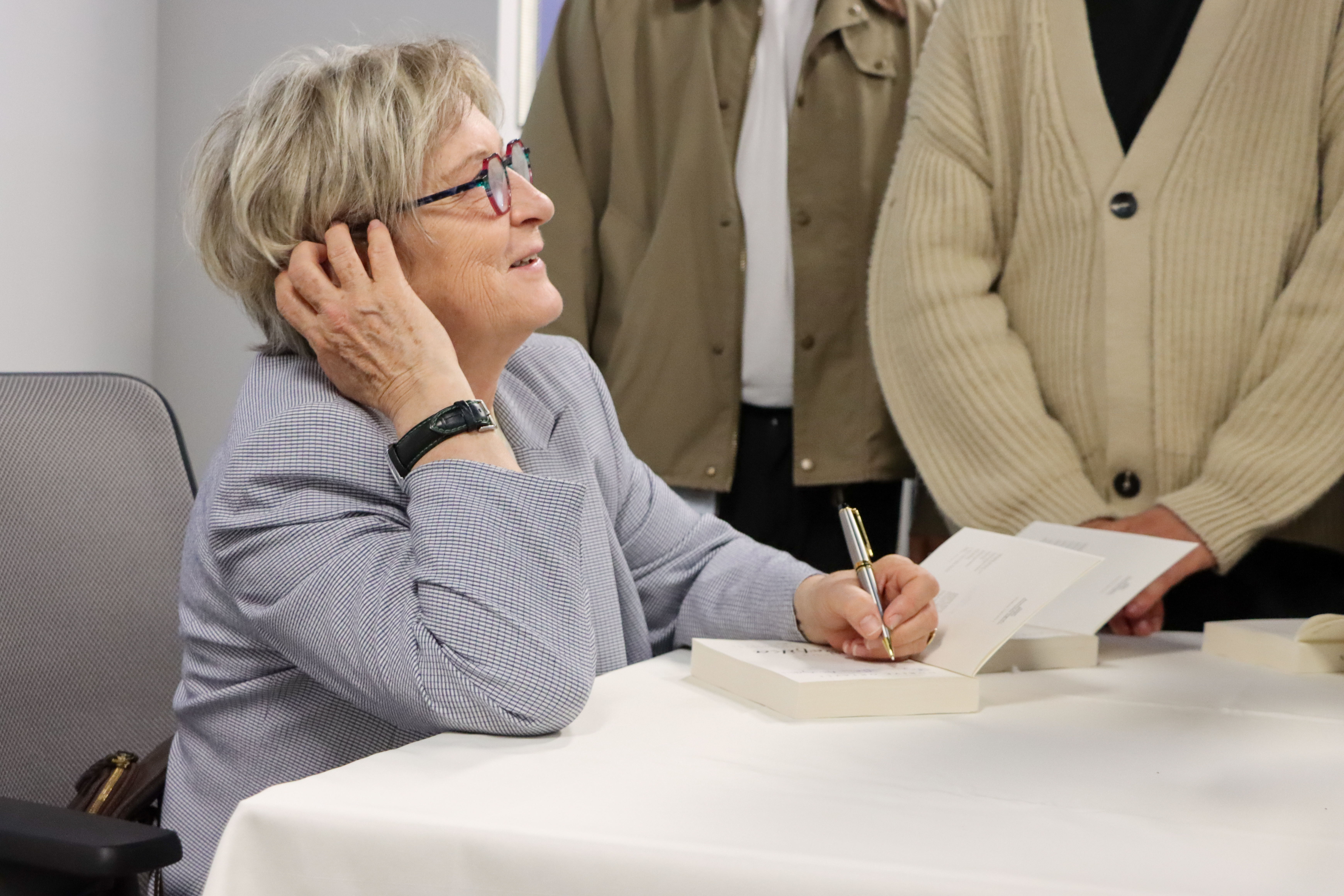
BOOK SIGNING HELD FOLLOWING THE TALK
Following the discussion, Nuriye Ortaylı signed copies of "Annem Şefika" for attendees. Students, academics, and guests had the opportunity to meet Ortaylı and discuss the book during the signing session.
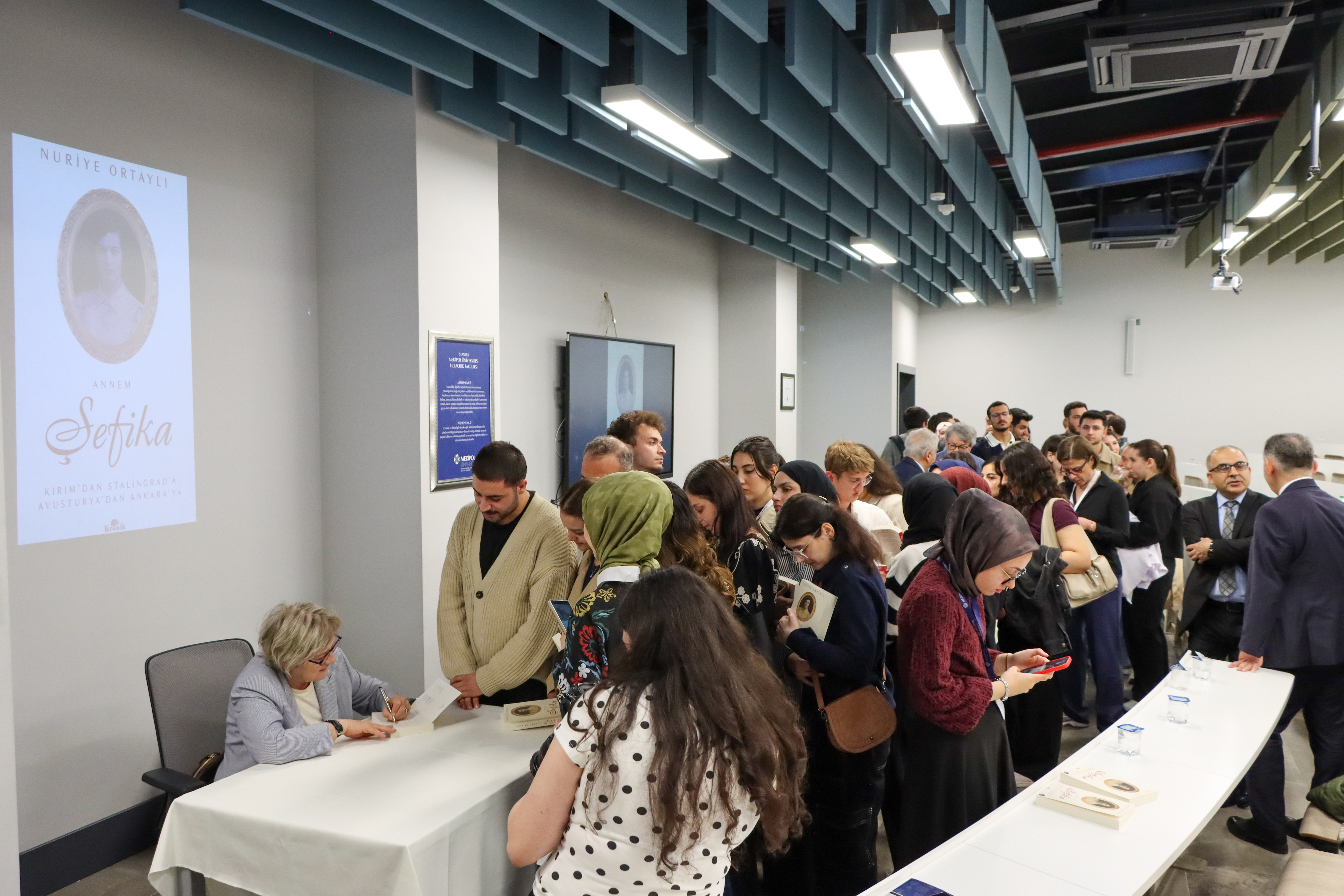
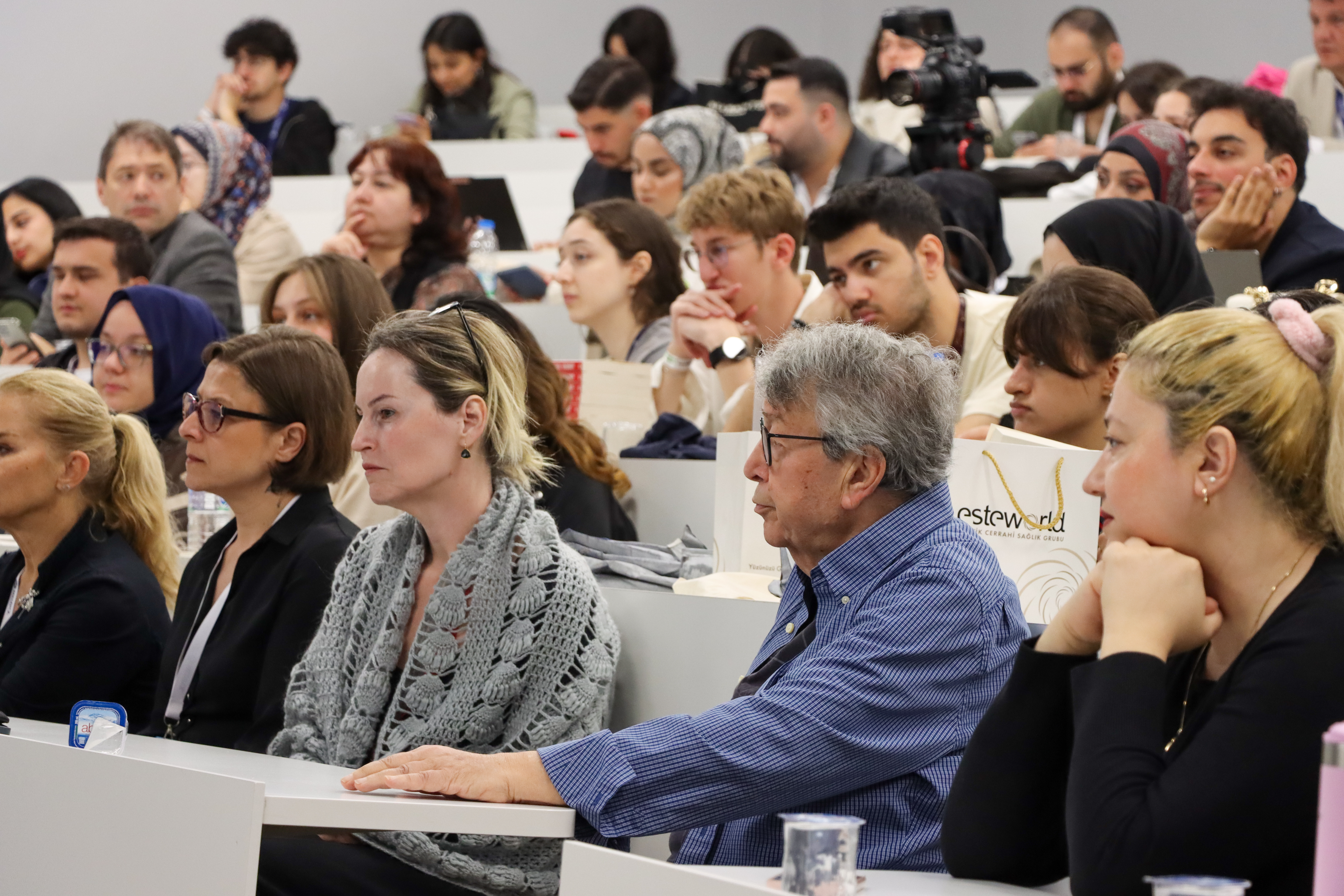
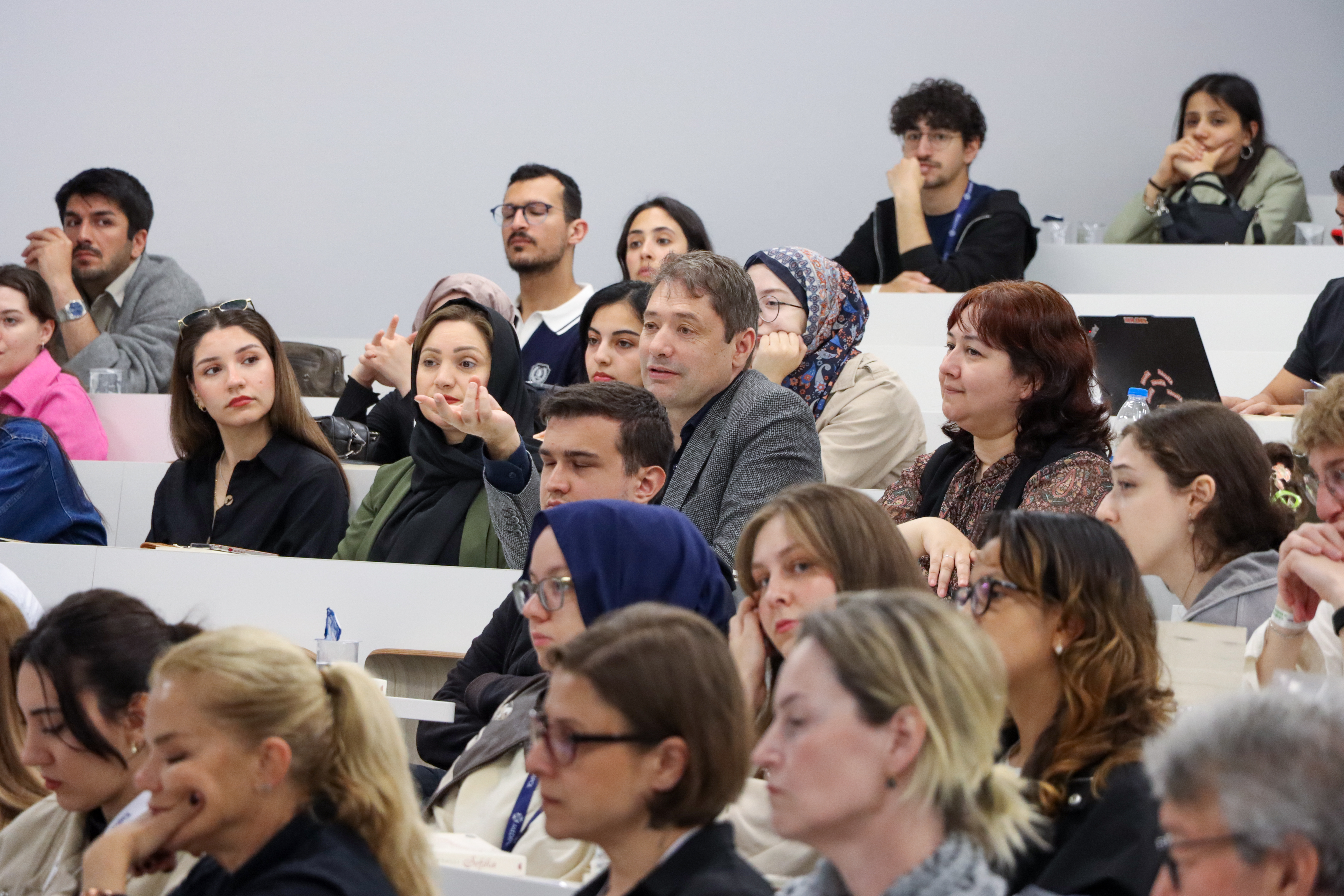
During the event, which attracted considerable interest from participants, Ortaylı also answered questions about her mother’s life and the process of writing the book. The program concluded with the book-signing session and a commemorative group photograph.
Last Update : 09/06/2026 - 14:25