Türkiye and Germany launch technology cooperation initiative: A new roadmap for digital transformation in industry
An international joint report between Türkiye and Germany, to which Assoc. Prof. Faik Tanrıkulu, a faculty member at Istanbul Medipol University, contributed as one of the rapporteurs, has presented a roadmap for next-generation production models focused on artificial intelligence and Industry 4.0. Prepared through the collaboration of the Fraunhofer research network and the Karlsruhe Institute of Technology (KIT), the study aims to accelerate the digital transformation processes of Turkish SMEs, strengthen their integration into European value chains, and foster new R&D collaborations between the two countries.
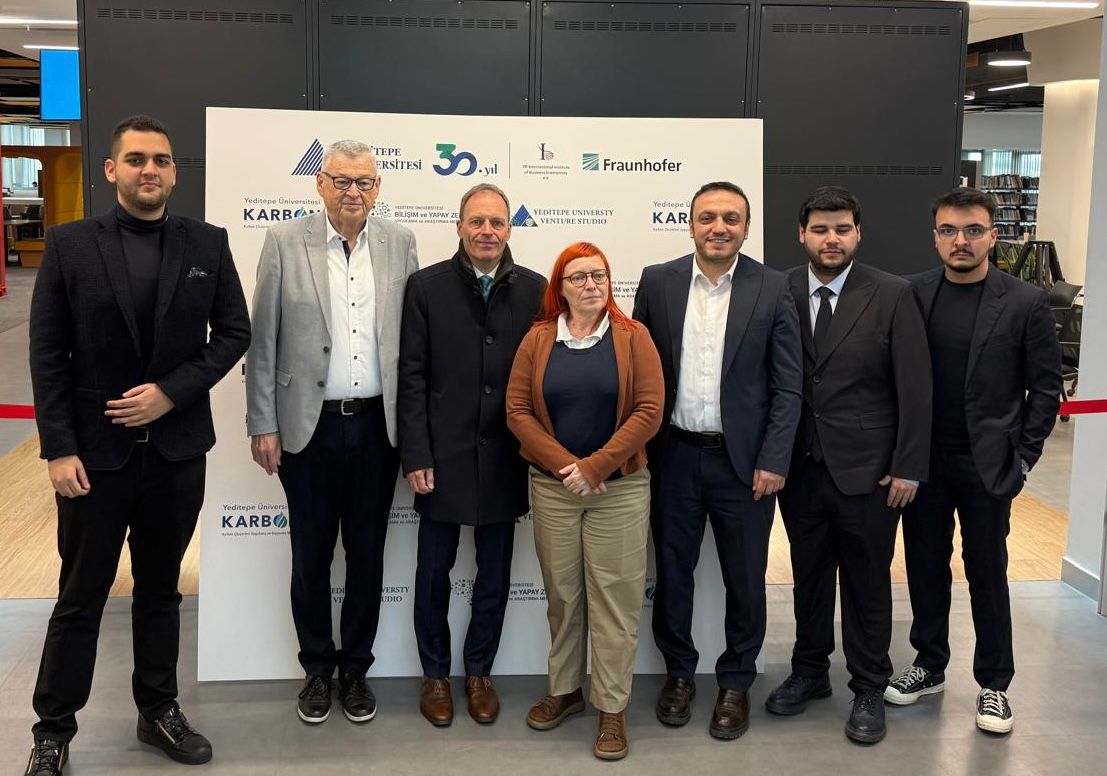
The international report titled “Turkish-German Digital Technology Exchange: R&D Cooperation in Manufacturing Engineering and Manufacturing-Related Information & Communication Technology”, to which Assoc. Prof. Faik Tanrıkulu, a faculty member of the School of Humanities and Social Sciences at Istanbul Medipol University, contributed has been published. Conducted from Karlsruhe and Ankara, the study was prepared through the collaboration of the Fraunhofer IOSB and Fraunhofer IPA institutes under the Germany-based research organization Fraunhofer-Gesellschaft, the Karlsruhe Institute of Technology (KIT), IIB e.V., and ENOSAD. Focusing on artificial intelligence, Industry 4.0, digital data spaces, and manufacturing technologies, the report aims to develop next-generation R&D and innovation collaborations between Türkiye and Germany, while particularly seeking to accelerate the integration of small and medium-sized enterprises into European value chains.
The report draws attention to shared challenges such as increasing cost pressures in the manufacturing sector, shortages of qualified human resources, data fragmentation, and compliance processes with European Union standards, emphasizing that digitalization is no longer a choice but a fundamental prerequisite of modern manufacturing. It further states that it is of strategic importance for Turkish industry to work jointly with German research infrastructure, particularly in the areas of data-driven decision-making processes, predictive maintenance systems, digital twin technologies, and integrated supply chains.
A NEW DIGITAL TRANSFORMATION MODEL FOR TURKISH SMEs
The report dedicates a special section to the structural challenges faced by small and medium-sized manufacturing enterprises in Türkiye during their digital transformation processes. According to the report, Turkish SMEs are unable to adapt rapidly enough to artificial intelligence and Industry 4.0 technologies due to high costs, inadequate data management, a shortage of specialized personnel, and legal uncertainties. The report notes that the rate of artificial intelligence adoption in the manufacturing sector remains at 7 percent, while 74.2 percent of enterprises identify the lack of sufficient expertise as the greatest obstacle.
Within this framework, it is stated that Turkish enterprises can develop pilot projects without establishing large-scale R&D teams, collaborate with Fraunhofer experts in joint application areas, and gradually develop scalable digital solutions. Furthermore, it is noted that the innovation and technology transfer centers planned for establishment in Istanbul could accelerate the integration of Turkish industry into European manufacturing networks.
ARTIFICIAL INTELLIGENCE, DATA ECOSYSTEMS, AND DIGITAL TWIN TECHNOLOGIES TAKE CENTER STAGE
The study identifies artificial intelligence, machine learning, data spaces, digital twin technologies, and international data-sharing infrastructures such as Manufacturing-X and Catena-X among the key domains shaping the future of modern manufacturing. In particular, digital twin technologies are highlighted as playing a critical role in the simulation of production facilities, the optimization of maintenance processes, and the enhancement of energy efficiency.
The report also emphasizes that Türkiye’s integration into international data standards such as OPC UA, Catena-X, and Manufacturing-X is of great importance for cross-border data sharing, artificial intelligence applications, and compliance processes related to the European Green Deal.
THE KARLSRUHE MODEL PRESENTED AS AN EXAMPLE FOR TÜRKİYE
The report examines the innovation ecosystems of Aachen, Hamburg, OWL, and Karlsruhe in Germany as exemplary cases. Particular attention is drawn to the Karlsruhe region as one of Europe’s strongest research centers in the fields of artificial intelligence, manufacturing technologies, and information technologies. It is emphasized that the region has established a highly qualified workforce and strong applied research capacity through the collaborative innovation network it has built among universities, Fraunhofer institutes, research centers, and technology companies.
The study recommends the establishment of similar regional innovation clusters in Türkiye. It further states that existing structures such as MEXT, Bilişim Vadisi, and Teknopark Istanbul are among the centers capable of developing joint pilot projects with the Fraunhofer research network and the Karlsruhe ecosystem in Germany.
CONCRETE RECOMMENDATIONS FOR TÜRKİYE–GERMANY R&D COOPERATION
The report states that the joint R&D calls previously implemented under the “2+2” model between the two countries should be reinstated. It emphasizes that TÜBİTAK’s Program for Enhancing the Capacity to Benefit from International Research Funds and its Support Program for International R&D Cooperation provide significant funding opportunities for universities and companies.
The research further indicates that joint master’s and doctoral programs should be developed between Turkish and German universities, high-speed digital infrastructure should be expanded across manufacturing regions, and joint training centers should be established for artificial intelligence-based manufacturing systems. In addition, it is stated that the development of sustainable manufacturing models aligned with the European Green Deal, as well as the establishment of common standards in the areas of digital product passports and data governance, would strengthen industrial cooperation between the two countries.
Assoc. Prof. Faik Tanrıkulu stated that the report provides an important roadmap for strengthening Türkiye’s digital manufacturing capacity and emphasized that applied collaborations between Turkish industry and the German research ecosystem would not only accelerate technological transformation but also strengthen Türkiye’s position within European value chains.
Last Update : 01/06/2026 - 13:18