Hilal Özgani addressed the audience from Radio Campus
The last program of Radio Campus was hosted by experienced radio presenter Hilal Özgani.
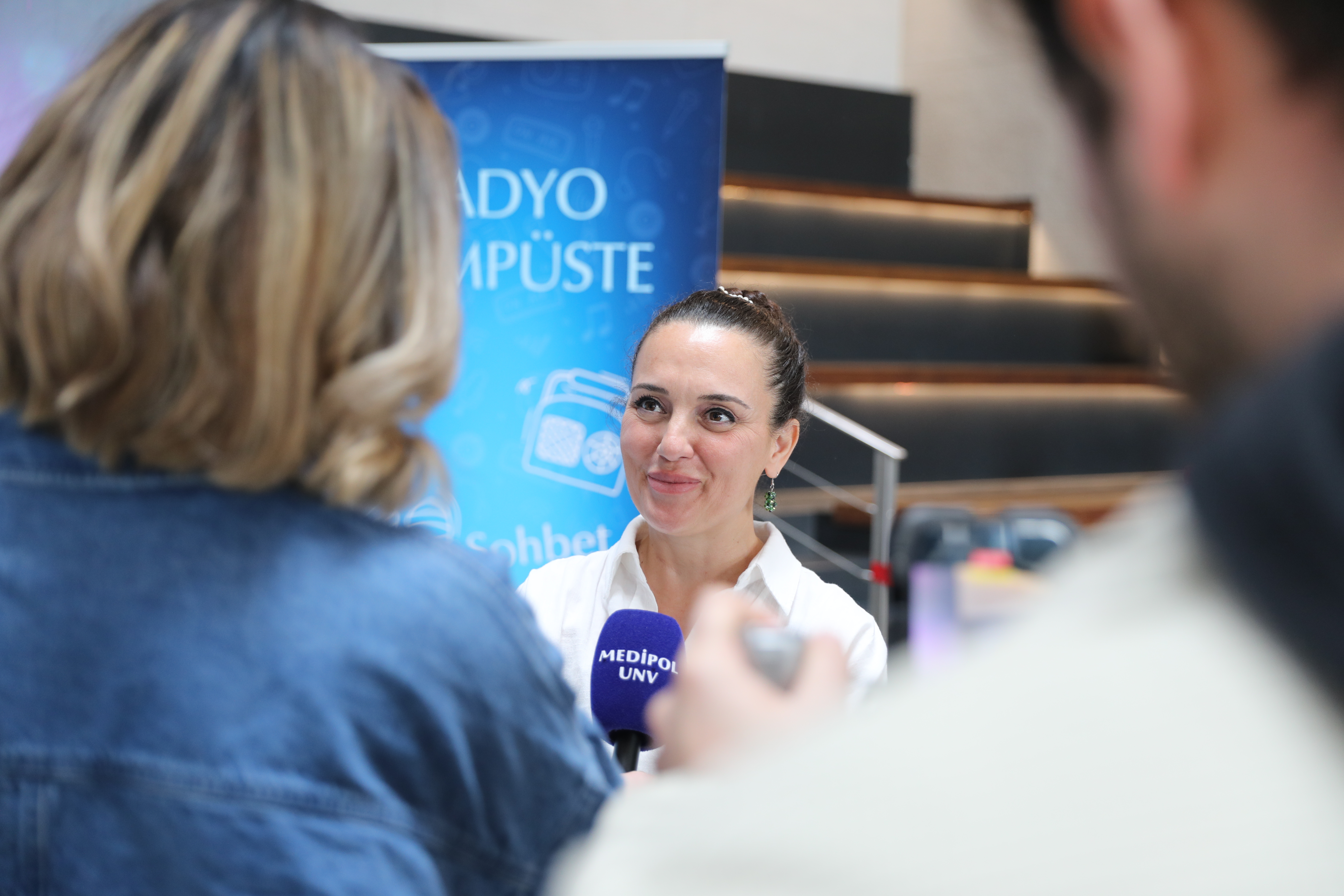
Radio Medipol’s live broadcast program “Radio Campus” continues to share current issues in the health field, innovations in the media sector, professional experiences, and career tips with listeners by hosting experienced names in the media world. In the live broadcasts organized at Istanbul Medipol University South Campus, leading names in radio broadcasting meet with students every week and share their knowledge and experiences. The fifth broadcast of the program was hosted by Hilal Özgani, an experienced radio presenter from Radio Turkuvaz. The program, which was broadcast live on the YouTube channel of Istanbul Medipol University, featured Dr. Yasin Kulaksız from the Ear, Nose, and Throat Department of Medipol Acıbadem Regional Hospital, as well as students and administrators from the campus. The first part of the one-hour program discussed misconceptions about rhinoplasty and the importance of choosing a doctor. Özgani stated that addressing the audience was a new experience for her and that she was happy to be at Medipol.
DR. KULAKSIZ: NOSE SHAPE AFFECTS BREATHING
In the program, Hilal Özgani and Dr. Yasin Kulaksız discussed important points about rhinoplasty surgeries and surgeon selection. Highlighting the misconceptions about rhinoplasty, Dr. Yasin Kulaksız said: “Rhinoplasty does not only change the external appearance of the nose, but it also affects breathing.” The shape of the nose is directly related to breathing function. Breathing can be difficult with a deformed nose. In addition, patients think they can have unlimited changes with surgery. However, excessive reduction or thinning can make breathing difficult. The main purpose of the surgery is to maintain a natural appearance and not disrupt functionality.” Referring to the surgery process, Dr. Kulaksız said: “With the development of techniques, the operation time varies between 2 and 4 hours. The recovery process usually takes a week. Most of the edema is removed on the second or third day. Today, these processes have become quite short compared to the past.”
Last Update : 19/04/2026 - 12:44