“Green” transformation is not enough to reduce environmental pressure
An international study involving Assist. Prof. Şeyma Bozkaya of Istanbul Medipol University analyzed 30 years of data from 18 G20 countries. The study found that as renewable energy and environmentally friendly technologies increased, pressure on the environment did not decrease; instead, it increased.
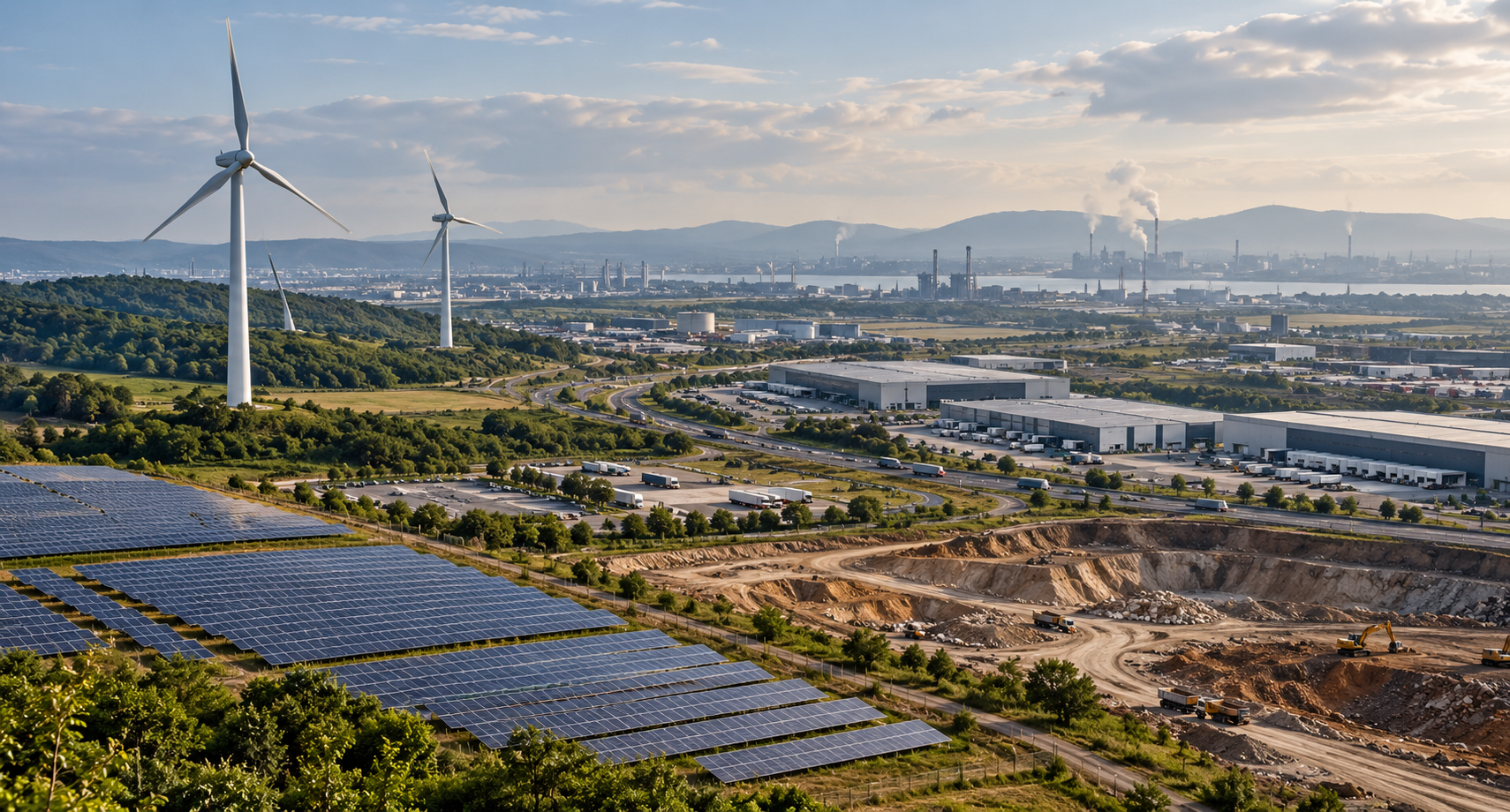
Green energy, environmentally friendly technologies, and more efficient production methods developed to reduce the environmental pressures associated with economic growth may not always deliver the expected results. An international study involving Assist. Prof. Şeyma Bozkaya of Istanbul Medipol University School of Business and Management Sciences examines the environmental outcomes of the green transition across G20 countries.
Published in Environment, Development and Sustainability under the title “Are green innovation, green energy and green manufacturing successful in promoting ecological development? Evidence from G-20 countries” the study investigated the relationship between environmental quality and green innovation, renewable energy supply, green manufacturing, and economic growth.
The researchers used the ecological footprint to assess environmental quality. This measure refers to the biologically productive land and water area required to provide the resources consumed by individuals, countries, or economic activities and to absorb the waste they generate. Rather than focusing solely on carbon emissions, it therefore provides a broader assessment of resource use and pressure on the environment.
30 YEARS OF DATA FROM 18 G20 COUNTRIES ANALYZED
The study analyzed data from 18 of the 19 individual countries in the G20 between 1992 and 2021. Argentina, Australia, Brazil, Canada, China, France, Germany, India, Indonesia, Italy, Japan, Mexico, Russia, South Africa, South Korea, Türkiye, the United Kingdom, and the United States were included, while Saudi Arabia was excluded due to data limitations. The countries were selected in view of both their significant role in global production and economic activity and their importance for environmental sustainability.
Alongside ecological footprint and economic growth, green innovation was measured using the number of patents in each country; green energy supply by the share of renewable energy in total energy supply; and green manufacturing by production-based carbon dioxide productivity.
STRONGEST ASSOCIATION FOUND FOR ECONOMIC GROWTH
In the study’s long-term analyses, all four indicators were associated with an increase in ecological footprint. A 1 percent increase in each indicator corresponded to an increase in ecological footprint of approximately 0.75 percent for economic growth, 0.09 percent for green energy supply, 0.14 percent for green innovation, and 0.12 percent for green manufacturing.
The finding for economic growth, which had the highest coefficient, was considered in the context of the high levels of production and industrialization in G20 countries. Expanding production and consumption can increase not only energy and natural resource use but also waste generation. The findings indicate that, within existing patterns of production and consumption, economic growth alone does not guarantee environmental sustainability.
RISING PRODUCTION AND CONSUMPTION MAY LIMIT ENVIRONMENTAL GAINS
The researchers note that the infrastructure investments required for the transition to renewable energy, as well as the production activities involved in this process, may themselves create environmental pressures. They also suggest that the growth in green innovation may not yet have been sufficient to reduce environmental problems.
The findings on green manufacturing are likewise considered in the context of expanding production. Even when production processes become more efficient, an increase in total output can lead to greater use of natural resources. The researchers also draw attention to the “rebound effect,” in which environmental gains achieved through greater efficiency are diminished by increased consumption. One example is the increased use of fuel-efficient cars as a result of their lower fuel consumption.
OUTCOMES OF THE GREEN TRANSITION SHOULD BE REASSESED
A key contribution of the study is its assessment of environmental sustainability not solely through renewable energy consumption or carbon emissions, but by examining green energy supply, green innovation, green manufacturing, and economic growth together in relation to the ecological footprint. The researchers note that, particularly in the G20 context, relatively few studies have examined the relationship between green innovation and ecological footprint.
The findings show that the green transition cannot be achieved simply by adopting “green” technologies or production methods. The researchers emphasize that investments should focus not only on developing new technologies but also on implementing them in ways that use resources more efficiently and reduce waste generation and the environmental impacts of production processes.
In this context, the study recommends encouraging technological investment, supporting the implementation of new technologies, and developing sustainable economic growth strategies. Addressing green manufacturing and environmentally friendly technologies together, as well as considering the interplay between green energy and environmental technologies, are also highlighted as steps that could support the transition.
Last Update : 02/10/2026 - 10:55