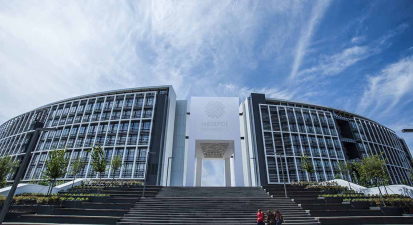
Çamurcu: Asking for help is also part of being resilient
At the Youth and Mental Health Talks held at Istanbul Medipol University, psychological resilience was highlighted as a capacity that can be learned and strengthened through support. Elmas Çamurcu, a psychologist at the Beykoz District Health Directorate, emphasized that resilience does not mean being unaffected by difficulties, but rather being able to regain balance after facing challenges. She also drew attention to the importance of social support and seeking help.
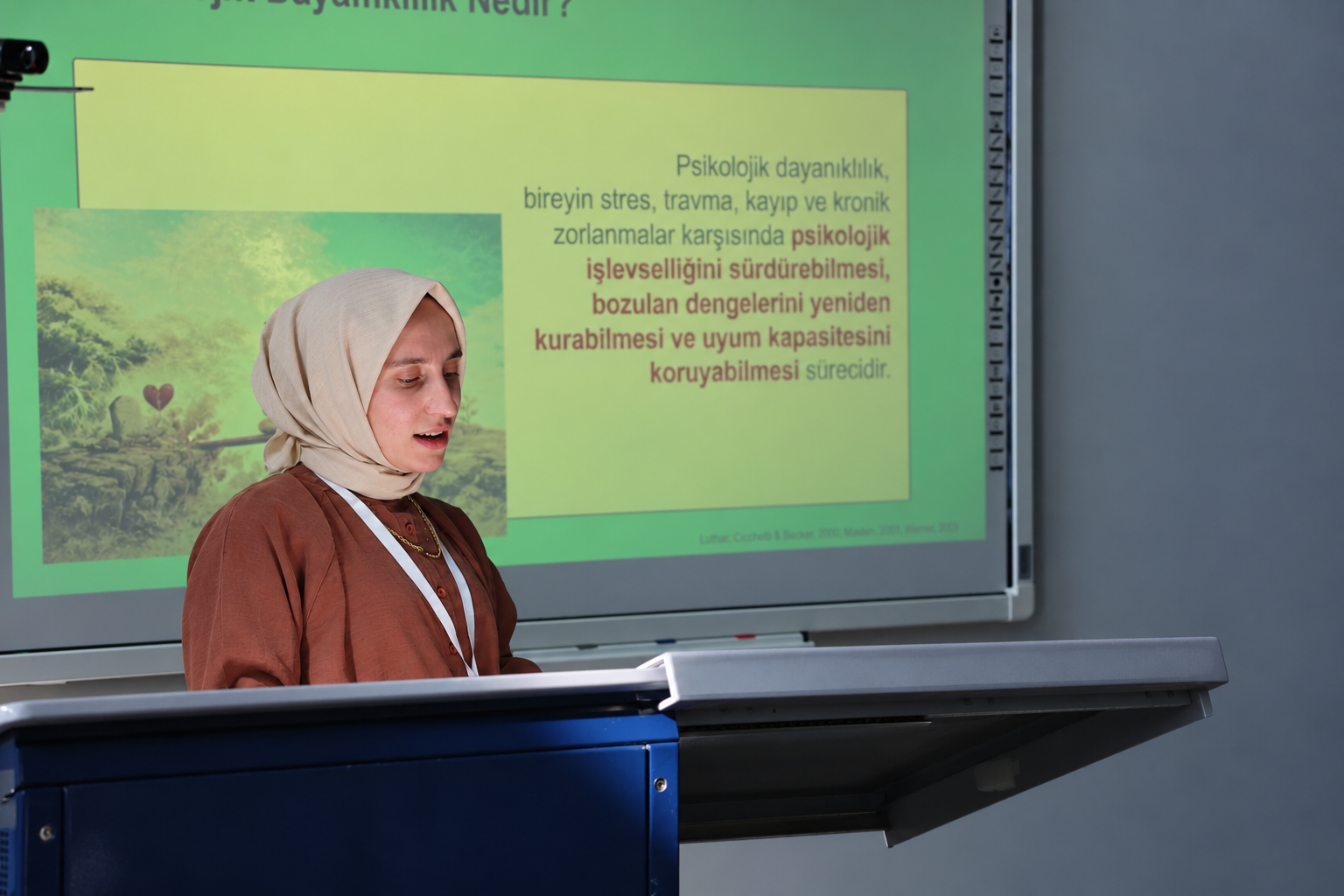
The Youth and Mental Health Talks, organized by the Department of Health, Culture and Sports at Istanbul Medipol University, took place in Lecture Hall 203 on the second floor of the South Campus. The event featured Elmas Çamurcu, a psychologist at the Beykoz District Health Directorate, who discussed the definition and historical development of psychological resilience, risk and protective factors, and modern approaches to the concept.
ÇAMURCU: RESILIENCE MEANS RECOVERING AFTER FACING DIFFICULTIES
Emphasizing that psychological resilience is a capacity everyone possesses to some degree, Elmas Çamurcu said:
“Psychological resilience does not mean being unaffected by everything, never feeling fear, or never experiencing anxiety. Resilience is the ability to face difficulties and regain our balance afterward.”
Çamurcu explained that resilience is not simply a matter of individual strength:
“Our biological makeup, cognitive processes, family relationships, social environment, and cultural context all play a role in psychological resilience. Sometimes, asking for help is itself a part of resilience and can even be an indication of it.”
TWO ESSENTIAL CONDITIONS AND THE HISTORICAL DEVELOPMENT OF RESILIENCE
Çamurcu explained that two conditions must be present for psychological resilience to be considered:
“First, there must be a stressor that challenges us. Second, despite these risks, can I maintain my psychosocial functioning, or can I restore it after it has been disrupted? When both conditions are present, we can speak of psychological resilience.”
Discussing the historical development of the concept, Çamurcu said:
“In the 1960s and 1970s, the term ‘invulnerable child’ was used to describe certain children exposed to high levels of risk. Over time, researchers realized that these children were not unaffected by adversity; rather, they benefited from protective factors. In modern approaches, resilience is no longer viewed as a fixed personality trait. Instead, it is understood as a capacity that can be learned, strengthened through support, and shaped by changing circumstances.”
Classifying risk factors into individual, family-related, and environmental categories, Çamurcu added:
“These factors are not destiny. They are areas where change is possible, and resilience can be strengthened through environmental conditions and social support.”
Throughout the event, a central message was emphasized: psychological resilience is not a fixed characteristic, but a capacity that can be developed and strengthened.
Last Update : 10/10/2026 - 14:13