“Brain Stimulation" method for stuttering: Effective, but not long-lasting
A research team including Assoc. Prof. Talat Bulut from the School of Health Sciences at Istanbul Medipol University examined the effects of the brain stimulation method tDCS, used in the treatment of stuttering on speech fluency. The study, published in the Journal of Fluency Disorders, revealed that the method can provide short-term improvement but does not produce a lasting effect, while emphasizing the necessity of personalized and long-term treatment approaches.
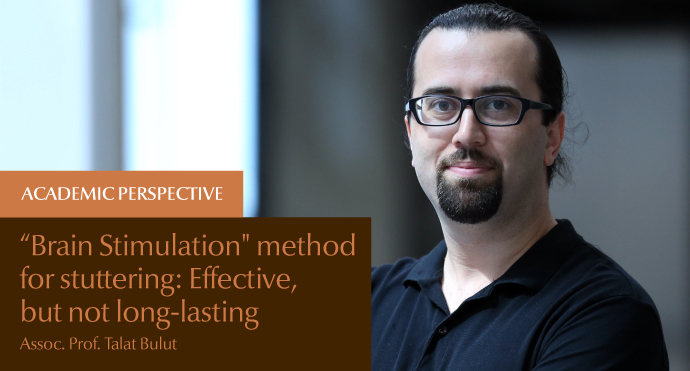
A research team including Assoc. Prof. Talat Bulut, a faculty member in the Department of Speech and Language Therapy at the School of Health Sciences of Istanbul Medipol University, conducted a comprehensive investigation into the effects of transcranial direct current stimulation (tDCS), a brain stimulation method on speech fluency in the treatment of stuttering. The study titled “An investigation of the effectiveness of bihemispheric tDCS on speech fluency in individuals with stuttering”was published in the Journal of Fluency Disorders. By demonstrating that tDCS application can enhance speech fluency in the short term but does not produce lasting effects, the research makes a significant contribution to ongoing debates in the field.
Stuttering, as a neurodevelopmental disorder that disrupts the flow of speech, directly affects individuals’ social lives, communication abilities, and overall quality of life. Although traditional therapy methods provide a certain degree of improvement, the durability of these gains often remains limited. For this reason, in recent years, neuromodulation techniques that directly target brain activity have emerged as an alternative approach.
BRAIN STIMULATION AND SPEECH THERAPY COMBINED
Within the scope of the study, a randomized, double-blind, placebo-controlled experiment was conducted on 36 adults aged between 18 and 52 who had been diagnosed with stuttering (an experimental design in which participants are randomly assigned to groups, neither the participants nor the researchers know which group receives the actual intervention, and a sham application is used in the control group). While 19 participants received tDCS at an intensity of 1 mA for 20 minutes per day over five consecutive days, the control group of 17 participants received sham (placebo) stimulation during the same period.
A key feature of the experimental design was the simultaneous application of brain stimulation and speech therapy. While participants performed a fluency-inducing task using the metronome-timed speech technique, they were concurrently exposed to tDCS. This approach aimed to induce simultaneous neuroplastic changes in brain regions associated with speech.
CRITICAL REGIONS FOR SPEECH PRODUCTION TARGETED
Through the “bihemispheric” stimulation model employed in the study (an application in which both hemispheres of the brain are targeted simultaneously), both hemispheres were stimulated concurrently. Anodal (excitatory) current was applied to the left inferior frontal gyrus, while cathodal (inhibitory) current was applied to the right inferior frontal gyrus.
This approach is grounded in neuroscientific findings indicating reduced activity in the left hemisphere and increased activity in the right hemisphere in individuals who stutter. The researchers tested the hypothesis that restoring this balance could improve speech fluency.
NO SIGNIFICANT DIFFERENCE IN THE LONG TERM
The findings revealed that tDCS application did not provide a statistically significant advantage over the placebo group in the long term. No significant differences were observed between the two groups in stuttering frequency (percentage of stuttered syllables) measured during both reading and spontaneous speech, either immediately after treatment or in follow-up assessments conducted one week later.
Similarly, no lasting improvement was observed in clinical scales measuring stuttering severity (SSI-4, a standardized tool assessing severity based on frequency, duration, and accompanying behaviors) or in psychosocial scales evaluating the impact of stuttering on individuals’ lives (OASES, an assessment tool measuring the effects of stuttering on daily life, communication, and quality of life). These findings indicate that the method does not provide a long-term therapeutic solution when used alone.
INTRA-DAY EFFECTS DREW ATTENTION
One of the most notable findings of the study was the short-term improvements observed during daily sessions. Comparisons conducted before and after each session showed that speech fluency in the tDCS group increased significantly within the same day.
This effect was particularly pronounced on the second day of measurement, but it did not persist in the following days. This suggests that tDCS may have an “immediate performance-enhancing” effect, although this effect does not translate into long-term outcomes.
Another noteworthy aspect of the study was the high variability among participants. Both the severity of stuttering and the response to brain stimulation varied considerably from one individual to another. Analyses indicated that a substantial portion of the observed outcomes stemmed from individual differences rather than the treatment effect itself. This finding underscores the need for the development of personalized treatment protocols rather than standardized approaches.
LONGER AND PERSONALIZED APPROACHES ARE NEEDED
The researchers emphasized that the five-day application period may not be sufficient to evaluate long-term effects. They also noted that the fixed dosage and electrode placement used in the study may not be optimal for every individual.
Accordingly, future studies should be designed with longer intervention periods, larger sample sizes, and individualized stimulation parameters.
CONTRIBUTION TO THE LITERATURE AND SIGNIFICANCE OF THE STUDY
The study fills an important gap in the literature regarding the use of tDCS in stuttering treatment. It is among the limited number of studies that examine the effects of the bihemispheric stimulation model using a randomized, double-blind, placebo-controlled design.
By demonstrating that the effects of tDCS on speech fluency are not enduring but rather short-term and session-based, the research offers a critical perspective on prevailing optimistic expectations. In this respect, it highlights that neuromodulation techniques may not be sufficient as standalone treatments, but should instead be considered within hybrid approaches combined with speech therapy.
Furthermore, by revealing the decisive role of individual differences in treatment outcomes, the study provides an important scientific foundation for the development of personalized neurotherapy approaches in the future. These findings offer valuable guidance for both clinical practice and further research.
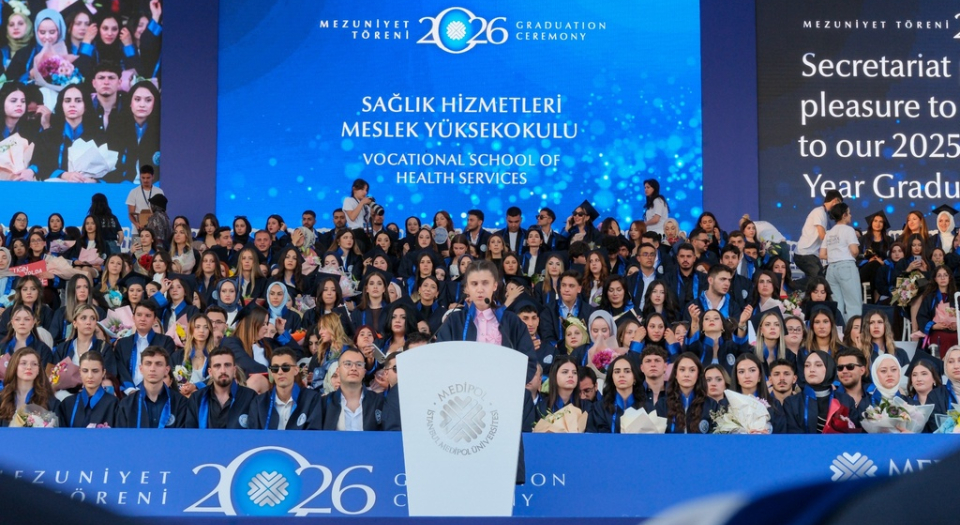
Inspiring message from visually impaired graduate Alkan: Nothing is an obstacle to success
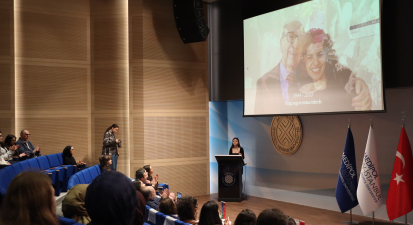
Firdevs Melike Alkan, a visually impaired graduate of the Vocational School of Health Services at Istanbul Medipol University, emphasized the importance of determination and solidarity during her graduation speech. Having successfully completed her education with the support of the University's Partner Student Program, Alkan encouraged her fellow graduates by saying, "Nothing is an obstacle to success."






Last Update Date: 05/05/2026 - 15:50

Inspiring message from visually impaired graduate Alkan: Nothing is an obstacle to success

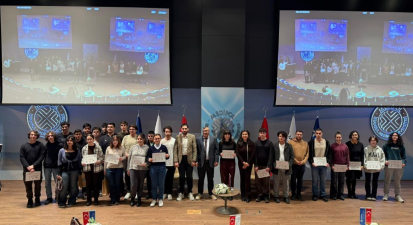
School of Health Sciences graduated students from 15 programs with a shared commitment to human life