Tax Law Symposium held
The “Tax Law Symposium” was organized by Istanbul Medipol University and Istanbul Tax Center.
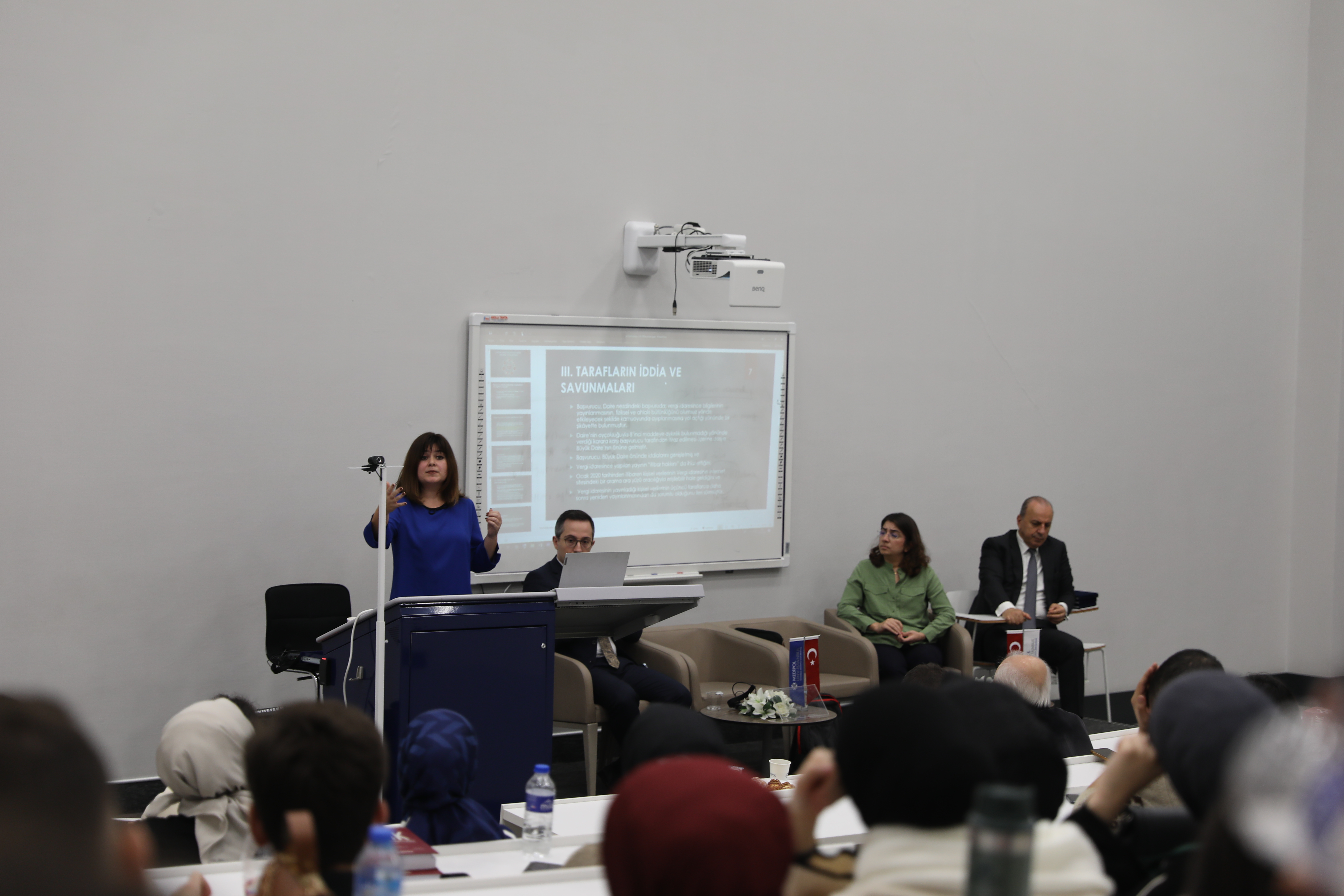
The “Tax Law Symposium” was organized in collaboration with Istanbul Medipol University School of Law and Istanbul Tax Center. The symposium featured two sessions titled “Taxpayer Rights” and “Digital World and Taxes.” Held at the South Campus, the symposium began with the opening speeches of the President of Istanbul Tax Center Prof. Hakan Üzeltürk and Dean of the School of Law Prof. Ayşe Nuhoğlu. Prof. Üzeltürk emphasized the relationship between the tax system and human rights, drawing attention to the importance of a fair tax system. Istanbul Medipol University School of Law Dean Prof. Ayşe Nuhoğlu stated that they value such collaborations as a university and faculty. Prof. Nuhoğlu said: “One of the most important duties of universities is to provide solution-oriented education by introducing our students to problems in the field.” Istanbul Treasurer Rıza Bilgiç also explained the effects of constitutional regulations and the right of individual application on tax law and said: “The Constitutional Court guides the judiciary by making important decisions on individual applications regarding taxes. These decisions both expand the areas of freedom and increase confidence in the tax system.”
KADANALIOĞLU: TAX ADMINISTRATION IS TRANSFORMING INTO A STRUCTURE THAT WORKS WITH THE TAXPAYER
Speaking at the symposium, Istanbul Revenue Office Income Laws Procedure Group Manager Ali Kadanalıoğlu made a presentation titled “Current Practices and Current Approaches of Tax Administration”. Kadanalıoğlu said: “Tax administration is no longer transforming into a structure that works in spite of the taxpayer, but together with the taxpayer.” Assoc. Prof. Gamze Gümüşkaya from Istanbul University School of Law evaluated the European Human Rights Hungary decision and said: “This decision is of critical importance in terms of determining the tax office’s authority to process personal data and the limits of this authority.” The last speaker of the first session, Dr. Zeynep Nihan Çamurcu from the Faculty of Law at Fatih Sultan Mehmet Vakıf University, also addressed the constitutional basis of the progressive income tax and said: “The principle of taxation according to financial strength is an important tool in ensuring social justice. However, this system must be balanced with the principles of property rights and equality protected by the constitution.”
ARKBAŞI: DIGITALIZATION PROVIDES TRANSPARENCY IN AUDIT
In the second session where digitalization and transformations in tax administration were discussed, Istanbul Revenue Administration VAT-SCT Group Manager Fatih Arkbaşı explained the effects of digitalization on the tax system. Arkbaşı said: “We aim to reduce the manual workload to 20 percent with the use of artificial intelligence in tax administration. Digitalization both facilitates the work of taxpayers and provides transparency in audits.” Speaking at the program, Dr. Ahmet Emrah Geçer from the Faculty of Law at Istanbul Medeniyet University also detailed the opportunities and challenges encountered in the digital transformation process of tax administration. Dr. Geçer stated: “The rapid development of technology is also reshaping tax systems. Digitalization transforms tax administrations into a more effective and reliable structure.”
DR. ÇELENER: REGULATORY FRAMEWORKS NEED TO BE ESTABLISHED IN TÜRKİYE
Finally, at the symposium, Dr. Balca Çelener from the Faculty of Law at Galatasaray University gave examples of practices in different countries and emphasized that Türkiye’s regulations in this field should be improved. Dr. Çelener said: “France has taken serious steps regarding the taxation of crypto assets. Similar regulatory frameworks need to be established in Türkiye. However, we cannot establish the correct taxation mechanism without clearly defining these assets.”
Last Update Date: 19/04/2026 - 13:55