Women's stories from Anatolia come to life in a documentary
The documentary "ANA'DOLU: Bacılar, Bibiler ve Ezeler" based on two years of field research and featuring Assoc. Prof. Gabriela Oana Olaru, a faculty member in the Public Relations and Advertising Program at the Istanbul Medipol University School of Communication, as a project researcher, has been completed. Focusing on Anatolia's women's memory, culture of solidarity, and tradition of production, the documentary brings together the past and the present through the testimonies of women themselves.
The documentary "ANA'DOLU: Bacılar, Bibiler ve Ezeler" for which Assoc. Prof. Gabriela Oana Olaru, a faculty member in the Public Relations and Advertising Program at the Istanbul Medipol University School of Communication, served as a project researcher, has been completed. Led by Prof. Ebru Güzel, the project was transformed into a scientific and cultural production following nearly two years of extensive field research.
During field studies conducted in different regions of Anatolia, women's life experiences, oral narratives, cultural practices, and knowledge passed down from generation to generation were documented. The documentary and the accompanying book, produced as the outcomes of the research, examine the place of women in social life and their role in historical memory in Anatolia from cultural, sociological, and communication perspectives. The documentary "ANA'DOLU: Bacılar, Bibiler ve Ezeler" has been submitted to numerous national and international film festivals.
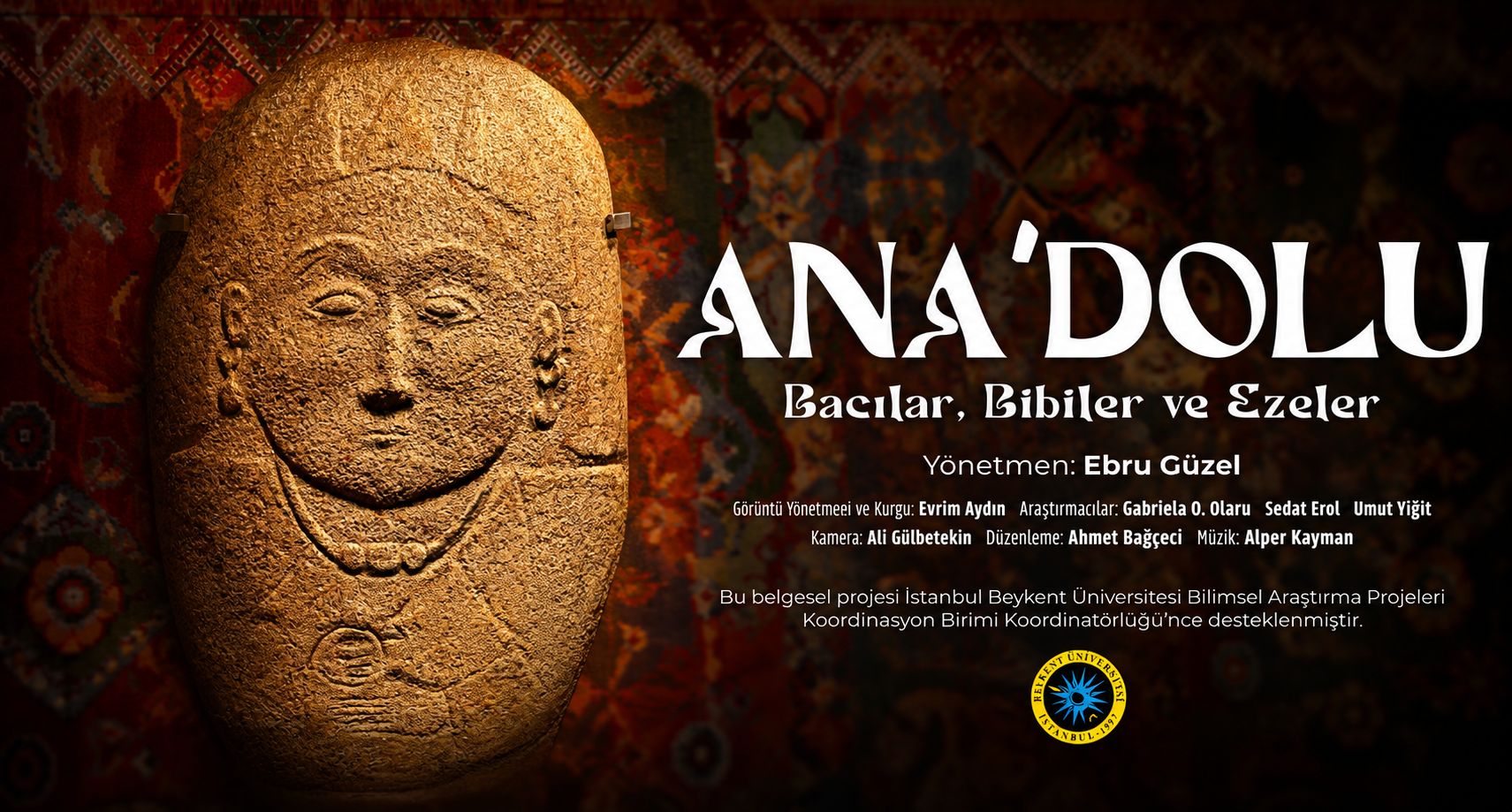
ANATOLIA'S CULTURAL MEMORY DOCUMENTED THROUGH WOMEN'S NARRATIVES
The documentary takes its name from the concepts of "bacı", "bibi" and "eze" which hold an important place in Anatolian culture. In the study, these concepts are addressed not merely as terms describing kinship relations, but as cultural structures through which women assume roles in production, solidarity, guidance, and social responsibility.
Within the scope of the research, interviews conducted with women in different cities reveal, through their personal life stories, the importance of producing, acting together, supporting one another, and sustaining a shared culture of communal life. Throughout the documentary, the strongest common theme expressed by the women is that solidarity is one of the fundamental values that strengthens individuals and sustains society.
While some narratives draw attention to the often unseen role of women's labor in sustaining families and society, others emphasize that knowledge, experience, and cultural traditions are transmitted from one generation to the next through women. In this way, the documentary brings together the findings of academic research with authentic life stories from the field, making the living memory of Anatolian women visible.
BRINGING HISTORICAL HERITAGE TO THE PRESENT
In the documentary, the concept of motherhood is approached not only as a biological identity but also as a form of social organization that shapes solidarity and a shared culture of living. Through research based on Anatolia's narratives, rituals, and cultural heritage, the historical origins of the concepts of bacı, bibi, and eze are examined, demonstrating that these structures reflect the productive and unifying roles of women in social life.
The study also explores the cultural traces of the Bacıyan-ı Rum tradition, which emerged in Anatolia during the 14th century. The historical background of women's collective participation in production, the establishment of solidarity networks, and the preservation of a shared culture of living is evaluated alongside contemporary examples such as women's cooperatives, local production initiatives, and community solidarity practices.
The women's narratives featured in the documentary also provide important testimonies supporting this historical continuity. The women explain that production is not merely an economic activity but one of the fundamental dynamics of life based on sharing, coexisting, and empowering one another. In this respect, the study makes visible the traces of women's solidarity in cultural memory from the past to the present.
Last Update Date: 31/07/2026 - 15:41