
Medipol University
Quality Policy
Our quality policy is in compliance with the policy processes defined and adopted by our University.
It is aimed to carry out activities directed towards the realization of our policy. Our goals are:
- Increasing Research and Development (R&D) activities,
- Providing qualified and student-centered education,
- Increasing the number of qualified academic staff,
- Making improvements in equipped research infrastructure and physical working facilities in line with external stakeholder feedback, the Core Curriculum, and student satisfaction survey analyses, meeting the expectations of both our students and academic staff,
- Fulfilling the requirement for evidence-based community service.
History
Istanbul Medipol University Faculty of Health Sciences Department of Orthotics and Prosthetics commenced its educational activities in the 2014-2015 academic year at the Kavacık Campus North Campus, as the first undergraduate program in orthotics and prosthetics in our country. The Founding Department Head is Prof. Dr. Z. Candan ALGUN. As of the 2016-2017 academic year, education continues at the Kavacık Campus South Campus. Our department produced its first 14 graduates in the 2017-2018 academic year. Our Master's program began education in 2017-2018 and graduated its first students during the 2019-2020 academic term. The Ph.D. program, on the other hand, started instruction in the fall term of 2022-2023. Established with the support of the Istanbul Development Agency (ISTKA) and located on our South Campus, the Prosthetics and Orthotics Center (POMER) became active in November 2016; education, research & development activities, and clinical professional practice are conducted within POMER. With its modern machinery, equipment, and an area of approximately 400 m², POMER has become one of the most technologically advanced orthotics and prosthetics centers in Turkey.
National Core Curriculum
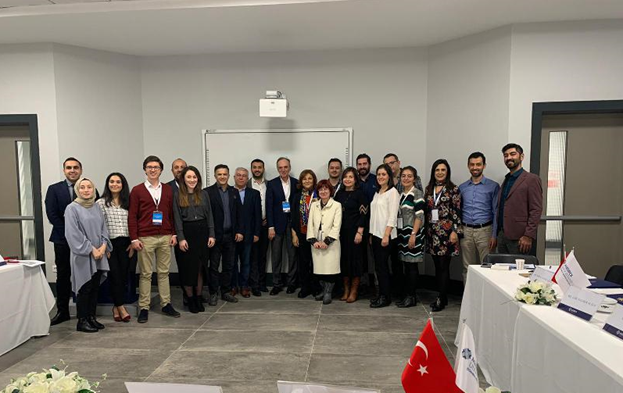
On December 13, 2019, a Core Curriculum (ÇEP) workshop was held at Istanbul Medipol University. On December 20, 2019, the final report was presented at SABDEK, and on April 29, 2021, the national evaluation process for the draft program was initiated. An external stakeholder meeting was held on November 27, 2024, and based on the feedback received, the Core Curriculum was finalized on December 5, 2024.
On November 28, 2025, a presentation on the "Orthotics and Prosthetics Core Curriculum" was delivered by Prof. Dr. Z. Candan ALGUN and Assoc. Prof. Dr. Esra ATILGAN at the 18th General Assembly Meeting of the Council of Health Sciences Deans. Efforts to secure the official approval of the Core Curriculum (ÇEP) for the Orthotics and Prosthetics Department are currently ongoing.
Fundamental Principle
- Open to innovation
- Creative
- Research-oriented
- Capable of analytical and multidimensional thinking
- Environmentally conscious
- Committed to lifelong learning
- Adherent to ethical values
- Aware of social responsibility
- Open-minded and independent in thought
- Honest
- Transparent
- Tolerant
- Able to work in multidisciplinary teams
Possessing effective interpersonal and communication skills
Program Objectives
Program Objectives
As the Department of Orthotics and Prosthetics, our aim is to graduate students as Orthotists and Prosthetists who keep up with technological developments and contemporary orthotic and prosthetic practices, continuously expand their knowledge, develop innovative and original designs in the field, and embrace a scientific approach.
Graduates of our program:
- Are trained as competent professionals who apply basic sciences to design and fit patient-specific orthoses and prostheses, utilize new materials and technologies, and play an active role in their development.
- Perform professional assessments and clinical practices related to orthotics and prosthetics in accordance with ethical principles, supported by adequate theoretical knowledge, technical equipment, and practical training opportunities.
- Contribute to health promotion, quality of life improvement, public awareness, education, research, and legal processes in the field of orthotics and prosthetics, while working collaboratively in interdisciplinary teams.
- Pursue continuous personal, professional, and academic learning and career development with a lifelong commitment to quality.
About the Department
About the Department
An orthosis is a device used to support a body segment that has partially or completely lost its function, assist movement, reduce the risk of deformity, and correct existing deformities.
A prosthesis is a device designed and manufactured to meet the individual measurements of an amputee who has lost a limb due to trauma or disease, with the aim of improving functional capacity and independence.
The Department of Orthotics and Prosthetics is an undergraduate program that provides education based on scientific and technological principles in the biomechanical assessment, design, fabrication, and application of orthoses and prostheses.
Orthotist-Prosthetists are healthcare professionals who design and manufacture assistive devices and technologies based on scientific methods to improve the functional capacity and independence of individuals with varying levels of ability and participation in society. Students who successfully complete the four-year undergraduate program are awarded a Bachelor’s Degree in Orthotics and Prosthetics and the professional title of Orthotist-Prosthetist, qualifying them to practice in the profession.
Graduates may work in public institutions and private-sector hospitals, orthopedic orthotics and prosthetics fabrication and application centers, foot health centers, and universities as academic staff in associate, undergraduate, and postgraduate education programs.
Our department aims to train and educate the next generation of Orthotist-Prosthetists through an educational approach that prioritizes scientific principles, embraces innovation, and keeps pace with developments and changes in the field. We strive to equip our students with the knowledge and skills necessary to contribute to the advancement of the profession in our country.
Program Information (English)
Aim
This program aims to graduate students who will have the competency to work in public relations and advertising sectors. Graduates will use effective communications in work environment, follow up the new trends, have good command on the new communication technologies and have ethical responsibility.Qualification Awarded
First Cycle (Bachelor's Degree)Registration and Admission Requirements
Students must have successfully graduated from high schools (or equals). The placements are done following the rules of Turkish Higher Education Council (YÖK) respect to the scores obtained from the nation-wide Student Selection and Placement (YGS and LYS). Student register to programmes on the days declared by the Rectorship Students should have earned a high school or an equivalent diploma and sufficient score on nation-wide Student Selection and Placement (YGS and LYS). Admission is based on the scores, according to the rules determined by Higher Education Council. For international students who will be accepted according to the National or International Exams, Quota and conditions are announced on our University’s website.Graduation Requirements
Students who complete their required/elective theoretical and applied courses with success and acquire at least 240 ECTS are eligible for a Bachelor of Arts Diploma. Graduation achievement degree is based on the CGPA (Cumulative General Point Average).In order to be eligible to graduate from the undergraduate program, students must take and complete Occupational Health and Safety training.Recognition of Prior Learning
Students may apply for exemption from the courses they have taken in another higher education or equally accredited institution. Exemption requests are decided by the board of governors of the School, which considers the opinion of the lecturer responsible for that course.Lesson Plan - ECTS Credits
* The courses indicated in this course table shows current course plan information in Student Affairs.
** Compulsory courses are certainly opened whereas opening of elective and optional courses may differ according to preferences and quota condition in related term.
*** Theoretical and practical course hours of vocational (professional) clinical courses are not considered weekly. These course hours refer to total course hours.
Please click on the course title in the table below in order to see detailed information about course objectives and learning outcomes etc.
| Fall Semester Courses Plan | ||||||
| Code | Course | Language of Instruction | T+U | UK | ECTS | Download |
| PR1138250 | INTRODUCTION to COMMUNICATION SCIENCE | English | 3 | 3 | 6 | |
| PR1138260 | INTRODUCTION to POLITICAL SCIENCE | English | 3 | 3 | 5 | |
| PR1138270 | FUNDAMENTALS of LAW | English | 3 | 3 | 5 | |
| PR1138280 | INTRODUCTION to PUBLIC RELATIONS | English | 3 | 3 | 6 | |
| PR1190130 | ACADEMIC ENGLISH I | English | 4 | 4 | 4 | |
| ATA1110300 | HISTORY of the TURKISH REPUBLIC I | English | 2 | 2 | 2 | |
| TDL1110400 | TURKISH LANGUAGE I | Turkish | 2 | 2 | 2 | |
| Spring Semester Courses Plan | ||||||
| Code | Course | Language of Instruction | T+U | UK | ECTS | Download |
| PR1238290 | INTRODUCTION to SOCIOLOGY | English | 3 | 3 | 5 | |
| PR1238310 | COMMUNICATION LAW | English | 3 | 3 | 5 | |
| PR1238330 | INTRODUCTION to ADVERTISING | English | 3 | 3 | 6 | |
| PR1250650 | COMMUNICATION SKILLS and PRESENTATION TECHNIQUES | English | 1+2 | 2 | 6 | |
| PR1290140 | ACADEMIC ENGLISH II | English | 4 | 4 | 4 | |
| ATA1210500 | HISTORY of the TURKISH REPUBLIC II | English | 2 | 2 | 2 | |
| TDL1210600 | TURKISH LANGUAGE II | Turkish | 2 | 2 | 2 | |
Program Qualification
Theoretical, Factual
Knows the basic concepts of Public Relations and Advertising disciplines and the basic theories of these disciplines.
Determines facts related to Public Relations and Advertising and analyzes these facts from various dimensions.
| Program Output TYYÇ Basic Area Matrix | |
| Basic Area Qualification | Program Qualification |
| KNOWLEDGE | |
| Theoretical, Factual | |
| 1-Having applied and basic conceptual knowledge at the entry-level in computer science subjects. | - |
| SKILLS | |
| Cognitive, Practical | |
| 1-Naming the analysis and modelling methods given for the determined solution of information problems. | - |
| 2-Using the algorithmic thinking and planning approach in its applications. | - |
| 3- Codes and tests specifications (specification) defined software components. | - |
| - | |
| COMPETENCIES | |
| Ability to work independently and take responsibility | |
| 1- Works individually or effectively in teams. | - |
| Learning Competence | |
| 1-Following the developments related to information and communication technologies with the awareness of the necessity of learning life. | - |
| Communication and Social Competence | |
| 1- Establishing verbal and written communication; using at least one foreign language at the European Language Portfolio A2 General Level, monitoring information in the field of informatics and computer sciences and communicating with colleagues. | - |
| - | |
| Field-based Competence | |
| 1-Carrying an awareness of professional and ethical responsibility, and having awareness of observing professional ethics in information practices. | - |
Employment Opportunities
Graduates will have the opportunity to work in a broad business environment, both in private and public sector. The graduates can work in national/international advertising agencies, public relations companies, digital communication companies, media organizations, event management companies, media planning and purchasing companies, non-profit organizations, political parties. They can also work as a strategic communication expert, corporate communication expert or public relation expert in national and international companies.The graduates would also have the opportunity of starting from scratch and build their own agency. Besides they may proceed with masters and doctorate degree and be an academician or have a pedagogic formation education and teach in high schools.Upgrading
Students may apply for the graduate programs, to obtain Master and PhD degrees in related field, following the rules defined by the Turkish Higher Education Council.Type of Training
Full TimeAssessment and Evaluation
Assestment is done via written exams, projects, assignments, in-class tasks and presentations. Students have to take mid-term and final exams. Avarage of these exams must be 60 and above to pass a course. Valid for all courses, a student who does not get at least 50 points from the general exam is deemed to have failed that course. Completing 240 ECTS, the student earns the right to graduate.Head of Department/Program
Head Of Department
Prof.Dr. Ayşen AKYÜZLearning Experiences
Learning situations aim to develop students' creative, critical, reflective thinking skills and higher level thinking skills such as logical and mathematical thinking skills. In addition, it aims to develop students' meta-cognitive skills. Learning situations include learning strategies, methods and techniques as well as the tools used and assessment and evaluation methods. The learning situations used in the programs are given in the list below:
Learning Experiences * | Learning Activities | Tools Used |
|---|---|---|
Discussion Method | Listening, speaking, asking questions, producing answers, developing and questioning opinions, examining and researching opinions, producing critical thinking, producing creative thinking, (workshop, panel, opposite panel, open forum, debate techniques are applied) collegium, forum, aquarium technique application, talking circle technique, application. | Standard classroom technologies, multimedia tools (text, images, graphics, graphics, drawings, audio, video and animations), computer, projection, online environments, conference room, workshop, panel, panel opposite, open forum collegial, forum environments. |
Demonstration Method | The instructor demonstrates the use of a tool or equipment, the instructor demonstrates a performance/practice/practice to the student, the students repeat the use of the tool or equipment, the student repeats a performance/practice/practice. | Real tools or model tools and equipment, multimedia tools, videos and animations), computer. |
Problem Solving Method | Identifying a scientific / theoretical and / or real life problem, analyzing the data related to the problem, developing alternative solutions, choosing the appropriate solution method, evaluating the solution to the problem, individual study | Textbooks, research reports, multimedia tools (text, images, graphics, graphics, drawings, audio, video and animations), computer |
Case Study Method | Presentation of case studies, exploring case studies, sampling typical cases, sampling outlier cases, alternative cases, comparing case studies, case study analysis, case study interpretation, case study evaluation. | Standard classroom technologies, multimedia tools (text, images, graphics, drawings, audio, video and animation, cartoons), computer, projection, online environments. |
Self Study Method | Student interest, curiosity and motivation, learning objective, detailed research and investigation according to the topic; in- depth research and investigation, extensive reading, listening and watching, repeating a performance. | Library, e-library, laboratory, workshop |
Question - Answer Technique | Asking Socratic questions, criticizing answers, generating questions, generating answers, criticizing, analyzing and evaluating creative answers, asking structured questions and generating answers, asking closed-ended questions and generating answers | Textbooks, recommended books, worksheets, question bank, multimedia tools (text, images, graphics, drawings, audio, video, cartoons and animations) |
Experimental Technique | Setting up a scientific experiment, conducting a scientific experiment, collecting, processing and transforming data from a scientific experiment, predicting the results of a scientific experiment, explaining a scientific experiment, evaluating the results of a scientific experiment, simulation of an experiment. | Laboratory, workshop, application areas, computer software, standard classroom technologies. |
Micro Teaching Technique | Performance of presentation, development of reflective thinking skills, student self-evaluation. The lecturer distributes topics (seminar topics can also be) to the students. Students examine the topics; research. Student presentations are prepared. Students make their presentations. Students' video recordings are watched. | Camera, video recording devices, checklist, rubric, rating scale, observation form. |
Brainstorming Technique | Developing opinions, developing questions, expressing observation situations, developing critical thinking, problem solving, group/team work, listening and speaking. | Standard classroom technologies, multimedia tools (text, images, graphics, graphics, drawings, audio, video and animations), computers, projectors, online environments. |
Project Based Learning Model | Creating a real-life problem situation scenario, identifying a real-life problem situation, collecting data related to the problem, analyzing data, data processing, data conversion, developing alternative solutions, choosing the appropriate solution method, applying the solution method / creating a model / design / concrete product / producing a concrete service, evaluating the model / design / concrete product / service, exhibiting project products | Problem scenario texts / Sample projects, databases, books, research reports, laboratory, workshop, application areas, library, computer software, standard classroom technologies, tools and equipment according to the project subject |
Reverse Brainstorming Technique | Identifying problems, sorting problems, classifying problems | Standard classroom technologies, multimedia tools (fishbones, text, images, graphics, graphics, drawings, audio, video and animations),computers, projectors, online environments |
Simulation Technique | Realization of simulations for risky, dangerous, expensive, time-consuming applications/practices. | Simulation environment, Computer |
Concept Map Technique | Distinguishing concepts, sorting concepts, counting concepts, associating concepts, analyzing conceptual framework | Concept maps |
Problem Baded Learning Model | Creating a reflective scenario of a real-life problem situation, identifying a real-life problem situation, collecting data about the problem, analyzing data, data processing, data transformation, developing alternative solutions | Problem scenario texts, databases, books, research reports, laboratory, workshop, application areas, library, computer software, standard classroom technologies, tools and equipment according to the project subject |
Computer-Internet Supported Instruction | Online Course Platforms : Collaboration and communication, digital literacy activities, sharing information, improving technology use, creative thinking activities, problem solving, generating critical thinking. These are environments where instructors share course materials, collect assignments and interact with students. E-Books and Digital Content : Reading, writing, comprehension, interpretation, creative thinking activities, language use, examination, research, using technology, critical thinking activities. Learning environment and materials are made more attractive by presenting interactive content to students. Webinars and synchronize meeting : Communication, collaboration, teamwork, presentation, technology skills, problem solving, live interaction with studentsremotely. Simulations : Problem solving, using technology, analytical thinking, communication, decision making, teamwork and collaboration. They are environments where students have the opportunity to experience the concepts. Audio and Visual aids : Communication skills, language skills, emotional intelligence and empathy, social skills, attention and focus, use of technology. Animations, graphics and interactive visuals are used to help students master the topics. Digital Game- Based Learning : Problem solving skills, ability to use technology, creative thinking, quick decision making, strategy development, cooperation and teamwork. Games prepared or played in digital environments to make learning fun and increase retention in learning. Adaptive Learning Systems : Logical mathematical thinking activities, reading, writing, comprehension, interpretation, critical thinking activities. These are environments where students identify their weaknesses and are offered to carry out studies and activities specific to that area. Virtual Reality (VR) and Augmented Reality (AR) : Simulation and practical applications, creative thinking activities, using technology, planning, programming, social interaction and communication. 3D virtual environments are used to make learning fun and interactive. Social Media and Interactive Platforms : Communication, collaboration, teamwork, project management, interactive content creation, critical thinking activities. Personal platforms for students to share their thoughts on any topic, interact and produce content. Data Analysis and Monitoring Tools : Analytical thinking activities, logical mathematical thinking activities, problem solving, decision making, communication. These are tools used to assess and monitor student performance, identify student difficulties and create lesson plans accordingly. Artificial Intelligence Technologies : Data analysis and forecasting, game and strategy development, security and threat analysis, technology utilization skills, robotics and automation skills, creative thinking skills, computational thinking skills. | Moodle, Google Classroom, Edmodo, Edupage etc. Google Play Books, Apple Books, Amazon Kindle Store, BookBoon, OpenStax, etc. Zoom, Microsoft Teams, Google Meet, Adobe Connect, GoToMeeting, etc. NASA Eyes on the Solar System, FlightGear, Virtual Biology Lab, CarSim, SimCity, etc. Infographics, maps and graphs, charts and diagrams, tables, Podcast, audio books, interviews and chats, etc. Strategy and puzzle games, Simulation and construction games, mission games, real-time multiplayer games, etc. Udemy, Khan Academy, Duolingo, Cognii, Smart Sparrow, etc. Oculus Rift, PlayStation VR, Samsung Gear VR, Google CardBoard, Pokemon Go, Arlit, Facebook, instagram, twitter, linledIn, snapchat, pinterest, youtube, twitch, reddit, discord etc. Google Analytics, Microsoft Power BI, Splunk, Adobe Analytics, etc. ChatGPT, Google AI, Deeply, DıaloGPT. Amazon Alexa, Tesla Autopilot, etc. |
Inquiry-Based Learning | Exploring, finding case studies, establishing cause and effect relationship, questioning, examining, researching (learning circle=3E,5E,7E models | Standard classroom technologies, multimedia tools (text, images, graphics, graphics, drawings, audio, video and animations), computer, projection, online environments, conference room |
Cooperative Learning | Cooperation, communication, leadership, sharing tasks, sharing responsibility, learning together, social interaction. Heterogeneous groups are formed among the students. The task is given to the groups. Groups of students do tasks such as project, performance, problem solving, role playing, classical homework together. | In-class and out-of-class, in-school and out-of- school environments. |
Experiential Learning | Faculty-external stakeholder (industrial organizations, schools and others) cooperation is established. Students directly observe professional skills in the real environment. Observation results are analyzed in the classroom environment. | Internship places according to the program, professional practice places, Student product file sample, observation forms and other alterative measurement tools |
Flipped Classroom Learning | Problem solving, discussion, case study presentation, case analysis, critical thinking, creative thinking, video recordings appropriate to the learning objective are created or selected. Students make preliminary preparation by watching video recordings. The problem is solved in the classroom. The problem is discussed. | Video recordings, online environments, classroom |
Lecture Method | Listening, speaking, (lecture, conference, seminar, speech, statement and briefing techniques are applied) | Standard classroom technologies, multimedia tools (text, images, graphics, graphics, drawings, audio, video and animations), computer, projection, online environments, conference room |
Traditional Written Exam | Classical written exams to assess creative, critical and reflective thinking. Multiple- choice, short-answer (fill-in-the-blank, matching, true-false and other) exams to assess cognitive skills such as knowledge, comprehension, application and analysis. | Written exam papers, multiple choice tests, short answer tests, mixed tests, answer keys |
Multiple-Choice Exam | ||
Oral Exam | It aims to assess student-specific, creative, critical, reflective thinking skills and cognitive skills such as knowledge, comprehension, application, analysis and synthesis. It is not a general measurement and evaluation method. It is not applied in every program; it is program specific. | Oral question bank/ oral question pool, answer keys, checklists, rubrics, rating scales |
Homework | It is used to improve students' knowledge and skills, to encourage them to research and study, to complete their learning deficiencies, and to deepen their understanding of a subject. | Library, e-library, books, articles |
Project Task | Identifies, field of application, collecting, and analyzing data, literature review, preparing and presenting report | Internet databases, library databases, e-mail, textbooks, or supplementary books |
Quiz | It is done to identify learning gaps. In this case, student grades are not reflected. The level of realization of learning objectives can be evaluated depending on the process. In this case, it can be reflected in student grades. | Worksheets, question bank, question pool, answer key |
Performance Task | It is used when it is aimed to evaluate students holistically (cognitive, affective and psychomotor). It is used to measure and evaluate the learning process and learning products. Performance assignments involve a workload of at least two weeks. | Problem scenario texts, checklists, rubrics, grading scales |
Portfolio Task | It is used to assess students holistically (intellectually, behaviorally, socially). It includes at least one year of student activities. In special cases, it may be for a semester. | Sample protfolios, checklists, rubrics, rating scales |
Group Assessment Technique | In cases where the cooperative learning model is applied, the instructor evaluates the group. The evaluation result can be converted into a grade. | Group evaluation form (can be used in contor list rubric, grading scale form) |
Course - Program Competencies Relations
| Course | 1 | 2 | 3 | 4 | 5 | 6 | 7 | 8 | 9 | 10 | 11 | 12 | 13 | 14 | 15 | 16 |
|---|---|---|---|---|---|---|---|---|---|---|---|---|---|---|---|---|
| ACADEMIC ENGLISH II | 1 | 1 | 0 | 3 | 0 | 1 | 0 | 0 | 5 | 4 | 0 | 3 | 0 | 0 | 1 | 2 |
| ACADEMIC ENGLISH III | 0 | 0 | 0 | 0 | 0 | 0 | 0 | 3 | 5 | 0 | 0 | 4 | 0 | 0 | 0 | 0 |
| ADVERTISEMENT ANALYSIS | 0 | 3 | 4 | 0 | 3 | 3 | 4 | 3 | 0 | 2 | 0 | 0 | 3 | 4 | 0 | 3 |
| ADVERTISING COPYWRITING | 1 | 1 | 1 | 1 | 1 | 0 | 0 | 1 | 1 | 1 | 0 | 1 | 0 | 0 | 0 | 0 |
| ADVERTISING DESIGN | 2 | 3 | 3 | 2 | 2 | 3 | 1 | 1 | 0 | 0 | 0 | 2 | 3 | 1 | 0 | 0 |
| ADVERTISING MODELS and STRATEGIES | 3 | 1 | 0 | 0 | 0 | 0 | 0 | 0 | 0 | 0 | 0 | 0 | 0 | 0 | 0 | 0 |
| ADVERTISING WORKSHOP | 1 | 1 | 1 | 2 | 1 | 1 | 0 | 0 | 0 | 0 | 0 | 0 | 3 | 0 | 0 | 0 |
| AGENCY MANAGEMENT | 2 | 2 | 1 | 2 | 1 | 2 | 0 | 0 | 1 | 0 | 0 | 2 | 1 | 2 | 0 | 0 |
| ART THEORIES and PRACTICES | 0 | 0 | 0 | 0 | 0 | 0 | 0 | 1 | 1 | 2 | 0 | 2 | 0 | 0 | 0 | 2 |
| BRAND MANAGEMENT | 1 | 1 | 1 | 1 | 1 | 0 | 0 | 1 | 5 | 2 | 0 | 1 | 0 | 0 | 0 | 0 |
| CASE STUDIES in MARKETING COMMUNICATION | 1 | 4 | 1 | 3 | 0 | 1 | 1 | 0 | 0 | 2 | 3 | 0 | 3 | 3 | 0 | 0 |
| CINEMA ART | 0 | 0 | 3 | 0 | 3 | 3 | 0 | 4 | 5 | 3 | 0 | 4 | 2 | 0 | 0 | 0 |
| COMMUNICATION SKILLS and PRESENTATION TECHNIQUES | 0 | 0 | 0 | 0 | 1 | 1 | 1 | 0 | 2 | 2 | 0 | 0 | 1 | 2 | 0 | 0 |
| COMMUNICATION SOCIOLOGY | 0 | 0 | 0 | 0 | 0 | 0 | 0 | 0 | 3 | 0 | 0 | 1 | 0 | 0 | 0 | 2 |
| CONSUMER BEHAVIOUR | 1 | 0 | 2 | 0 | 2 | 2 | 1 | 1 | 3 | 1 | 0 | 3 | 0 | 0 | 0 | 1 |
| CORPORATE COMMUNICATION | 2 | 3 | 3 | 4 | 2 | 2 | 1 | 0 | 0 | 1 | 2 | 0 | 2 | 2 | 0 | 0 |
| CORPORATE IDENTITY | 2 | 2 | 2 | 2 | 1 | 0 | 0 | 0 | 0 | 0 | 0 | 1 | 1 | 0 | 0 | 0 |
| CREATIVE ADVERTISING | 1 | 1 | 0 | 0 | 0 | 1 | 0 | 0 | 0 | 0 | 0 | 0 | 1 | 0 | 0 | 0 |
| CRISIS COMMUNICATION and MANAGEMENT | 1 | 2 | 2 | 2 | 3 | 3 | 1 | 1 | 1 | 0 | 0 | 2 | 3 | 1 | 0 | 0 |
| CULTURE, COMMUNICATION and SOCIETY | 3 | 3 | 0 | 2 | 0 | 0 | 3 | 0 | 0 | 0 | 0 | 0 | 0 | 0 | 0 | 0 |
| CUSTOMER EXPERIENCE MANAGEMENT | 1 | 1 | 3 | 1 | 1 | 2 | 1 | 1 | 5 | 3 | 1 | 2 | 3 | 1 | 0 | 1 |
| CUSTOMER RELATIONSHIP MANAGEMENT | 3 | 3 | 3 | 3 | 3 | 3 | 3 | 3 | 1 | 3 | 3 | 3 | 3 | 3 | 1 | 3 |
| DICTION | 1 | 0 | 1 | 0 | 2 | 2 | 0 | 3 | 0 | 0 | 0 | 0 | 0 | 0 | 0 | 0 |
| DIGITAL ADVERTISING | 1 | 0 | 0 | 2 | 2 | 0 | 0 | 0 | 0 | 0 | 0 | 0 | 0 | 0 | 0 | 0 |
| DIGITAL MEDIA LITERACY | 0 | 0 | 0 | 0 | 2 | 2 | 0 | 3 | 0 | 4 | 0 | 3 | 0 | 0 | 0 | 0 |
| DRAMATURGY | 0 | 0 | 4 | 3 | 3 | 3 | 0 | 4 | 5 | 4 | 0 | 4 | 0 | 4 | 0 | 0 |
| ENTREPRENEURSHIP | 0 | 1 | 1 | 0 | 0 | 0 | 0 | 0 | 0 | 0 | 0 | 0 | 0 | 1 | 0 | 0 |
| FUNDAMENTALS of LAW | 0 | 0 | 0 | 0 | 2 | 0 | 0 | 0 | 0 | 0 | 2 | 4 | 0 | 0 | 0 | 0 |
| GAMIFICATION APPLICATIONS | 2 | 2 | 3 | 3 | 3 | 3 | 0 | 2 | 0 | 1 | 0 | 1 | 2 | 2 | 0 | 0 |
| GRAPHIC ANIMATION | 0 | 0 | 2 | 2 | 3 | 2 | 1 | 2 | 0 | 3 | 0 | 0 | 3 | 1 | 0 | 0 |
| HEALTH COMMUNICATION | 1 | 1 | 1 | 1 | 1 | 0 | 0 | 0 | 0 | 0 | 0 | 0 | 0 | 1 | 0 | 0 |
| HEALTH TOURISM MARKETING | 0 | 0 | 2 | 3 | 1 | 1 | 0 | 0 | 0 | 0 | 0 | 0 | 1 | 1 | 0 | 0 |
| HISTORY of the TURKISH REPUBLIC II | 0 | 0 | 0 | 0 | 0 | 0 | 0 | 0 | 4 | 0 | 0 | 0 | 0 | 0 | 0 | 2 |
| HISTORY of the TURKISH REPUBLIC I | 0 | 0 | 0 | 0 | 0 | 0 | 0 | 0 | 4 | 0 | 1 | 0 | 0 | 0 | 0 | 1 |
| HUMAN RESOURCES MANAGEMENT | 0 | 0 | 0 | 0 | 0 | 1 | 0 | 0 | 1 | 1 | 0 | 1 | 0 | 0 | 0 | 0 |
| INTERCULTURAL COMMUNIICATIONS | 2 | 2 | 0 | 0 | 0 | 0 | 0 | 1 | 0 | 0 | 0 | 0 | 0 | 1 | 0 | 0 |
| INTRODUCTION to ADVERTISING | 2 | 1 | 0 | 0 | 0 | 0 | 0 | 0 | 0 | 0 | 0 | 0 | 1 | 0 | 0 | 0 |
| INTRODUCTION to ARTIFICIAL INTELLIGENCE | 0 | 4 | 0 | 4 | 0 | 5 | 0 | 5 | 4 | 5 | 0 | 3 | 5 | 0 | 0 | 0 |
| INTRODUCTION to COMMUNICATION SCIENCE | 2 | 1 | 0 | 3 | 3 | 3 | 2 | 1 | 0 | 0 | 1 | 4 | 3 | 1 | 0 | 0 |
| INTRODUCTION to DRAMATURGY | 0 | 3 | 4 | 0 | 2 | 4 | 0 | 3 | 5 | 3 | 0 | 3 | 0 | 4 | 0 | 0 |
| INTRODUCTION to ECONOMICS | 0 | 0 | 2 | 2 | 0 | 2 | 0 | 2 | 0 | 0 | 0 | 0 | 0 | 0 | 0 | 0 |
| INTRODUCTION to POLITICAL SCIENCE | 0 | 0 | 0 | 0 | 0 | 0 | 0 | 2 | 2 | 2 | 0 | 2 | 0 | 0 | 0 | 3 |
| INTRODUCTION to PSYCHOLOGY | 0 | 0 | 1 | 0 | 0 | 1 | 0 | 1 | 2 | 1 | 0 | 2 | 0 | 0 | 0 | 1 |
| INTRODUCTION to PUBLIC RELATIONS | 4 | 3 | 3 | 1 | 2 | 1 | 1 | 1 | 0 | 0 | 2 | 2 | 2 | 1 | 0 | 0 |
| INTRODUCTION to SOCIOLOGY | 0 | 0 | 0 | 0 | 0 | 0 | 0 | 0 | 2 | 0 | 0 | 2 | 0 | 0 | 0 | 2 |
| INTRODUCTION to WEB DESIGN | 0 | 0 | 0 | 0 | 0 | 0 | 0 | 0 | 0 | 1 | 0 | 0 | 0 | 0 | 0 | 0 |
| JOURNALISM WORKSHOP | 0 | 0 | 0 | 0 | 1 | 0 | 0 | 2 | 2 | 1 | 0 | 0 | 0 | 0 | 0 | 0 |
| MARKETING PRINCIPLES | 1 | 1 | 2 | 1 | 1 | 1 | 0 | 1 | 2 | 0 | 0 | 2 | 1 | 1 | 0 | 0 |
| MEDIA and POLITICS | 1 | 2 | 1 | 2 | 1 | 2 | 1 | 1 | 0 | 1 | 1 | 2 | 1 | 2 | 1 | 1 |
| MEDIA PLANNING | 1 | 2 | 2 | 1 | 2 | 1 | 2 | 1 | 0 | 2 | 1 | 2 | 2 | 1 | 1 | 2 |
| MEDIA RELATIONS in PUBLIC RELATIONS | 3 | 3 | 3 | 3 | 3 | 3 | 3 | 3 | 1 | 3 | 3 | 3 | 3 | 3 | 1 | 3 |
| MODELS and STRATEGIES of PUBLIC RELATIONS | 4 | 3 | 3 | 3 | 3 | 2 | 1 | 0 | 0 | 0 | 1 | 3 | 3 | 1 | 0 | 0 |
| OCCUPATIONAL HEALTH and SAFETY | 0 | 0 | 0 | 0 | 0 | 0 | 0 | 0 | 1 | 0 | 0 | 1 | 0 | 0 | 5 | 0 |
| PERSUASION STRATIGIES | 3 | 3 | 3 | 2 | 2 | 2 | 3 | 1 | 0 | 0 | 0 | 3 | 3 | 0 | 0 | 0 |
| PR and ADVERTISING PRACTICES in NEW MEDIA | 1 | 1 | 2 | 3 | 1 | 1 | 0 | 0 | 0 | 4 | 0 | 0 | 4 | 3 | 0 | 0 |
| PROFESSIONAL PRACTICE | 2 | 2 | 2 | 2 | 2 | 2 | 2 | 2 | 2 | 2 | 2 | 2 | 1 | 1 | 2 | 1 |
| PUBLIC DIPLOMACY and LOBBYING | 1 | 1 | 0 | 0 | 1 | 0 | 1 | 1 | 3 | 2 | 0 | 1 | 0 | 0 | 0 | 1 |
| PUBLIC RELATIONS and ADVERTISING CAPSTONE PROJECT | 5 | 5 | 4 | 5 | 5 | 5 | 5 | 3 | 5 | 5 | 5 | 3 | 5 | 5 | 0 | 2 |
| PUBLIC RELATIONS COPYWRITING | 3 | 3 | 4 | 4 | 0 | 2 | 0 | 0 | 0 | 0 | 0 | 1 | 2 | 0 | 0 | 0 |
| PUBLIC RELATIONS WORKSHOP | 2 | 2 | 3 | 3 | 3 | 3 | 1 | 1 | 3 | 1 | 2 | 2 | 3 | 1 | 0 | 2 |
| RESEARCH METHODS | 1 | 1 | 0 | 5 | 2 | 0 | 5 | 0 | 5 | 2 | 0 | 5 | 0 | 5 | 0 | 0 |
| SCREENPLAY ADAPTATIONS | 0 | 0 | 3 | 0 | 3 | 4 | 0 | 4 | 5 | 4 | 0 | 4 | 0 | 3 | 0 | 0 |
| SEMIOTICS | 0 | 3 | 0 | 0 | 2 | 2 | 3 | 3 | 0 | 0 | 0 | 0 | 0 | 0 | 0 | 0 |
| SOCIAL MEDIA and DIGITAL CAMPAIGNS | 2 | 3 | 3 | 3 | 2 | 3 | 1 | 4 | 1 | 3 | 0 | 0 | 3 | 2 | 0 | 0 |
| SOFTWARE APPLICATIONS | 0 | 0 | 0 | 0 | 3 | 4 | 0 | 0 | 3 | 0 | 0 | 0 | 3 | 0 | 0 | 0 |
| STRATEGIC PUBLIC RELATIONS | 3 | 3 | 3 | 3 | 3 | 3 | 1 | 2 | 1 | 2 | 2 | 3 | 3 | 2 | 0 | 1 |
| VISUAL EFFECT and PRACTICE | 0 | 0 | 0 | 0 | 0 | 0 | 0 | 1 | 0 | 2 | 0 | 0 | 0 | 0 | 0 | 0 |
| İlişkili Ders Sayısı / 67/100 | 74 | 88 | 92 | 92 | 91 | 98 | 55 | 80 | 101 | 90 | 32 | 99 | 83 | 66 | 12 | 36 |
Surveys for Students
| Strongly Disagree | Disagree | Neither Agree Nor Disagree | Agree | Strongly Agree | Don't Know/No Idea | Choose | |
|---|---|---|---|---|---|---|---|
| The lecturer explains the course's aim and extent and what is expected of the student clearly. | |||||||
| Chooses the course sources in accordance with the courses and announces them. | |||||||
| Guides/helps the students in accessing the resources they recommended for the course. | |||||||
| The lecturer's instruction method (course presentation) is clear, fluent and understandable. | |||||||
| Uses the instructional technologies (effectively.) | |||||||
| Offers multidirectional communication and interactional implementations in the classroom. | |||||||
| Has knowledge in the matter of traditional teaching strategic management and techniques. | |||||||
| Uses the teaching methods s/he covers in the course within their implementations. | |||||||
| Makes time for the student outside of course hours regarding the course | |||||||
| Comes to the class regularly and uses time effectively. | |||||||
| The lecturer is successful in establishing classroom dominance during the course. | |||||||
| Informs the students on current issues. | |||||||
| Sets an example with their open attitude and behaviour to students' opinions. | |||||||
| Success measurement methods and tools (classic/oral exam, project, assignments, etc.) are compatible with the course's aim and extent. | |||||||
| Helps me when I want to ask questions about my exam paper. | |||||||
| Lab/field/application studies are compatible with the aim and the extent of the course. | |||||||
| Develops the creative thinking process and skills of the learning and teaching process of the course. | |||||||
| The course is supported by the current issues and guests. | |||||||
| Things you would like to convey apart from the questions above; |
Numerical Data
Number of Students by years
Student Success
Graduate Success
Primary Mathematics Education
İstanbul Medipol University Department of Mathematics and Science Education was opened in 2016-2017 academic year.
In the department, there is an Primary Mathematics Education Program which started to accept students in 2017-2018 academic year for the first time. The program offers undergraduate degree and it dedicated to train well-qualified middle school mathematics teachers who will educate 5-6-7 and 8 grades.

Program
Information