9th National Landscape Architecture Congress held at Medipol
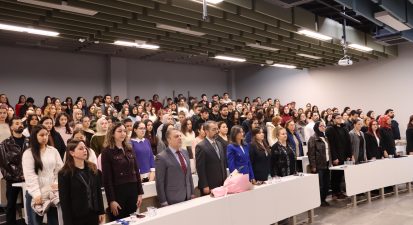
Hosted by Istanbul Medipol University, the 9th National Landscape Architecture Congress brought together academics, public institutions, local authorities, private sector representatives, and students. Organized under the theme “Projective Landscapes” the congress explored the future role of landscape architecture through a wide range of topics, from climate change and biodiversity to water management, archaeological landscapes, and urban resilience.
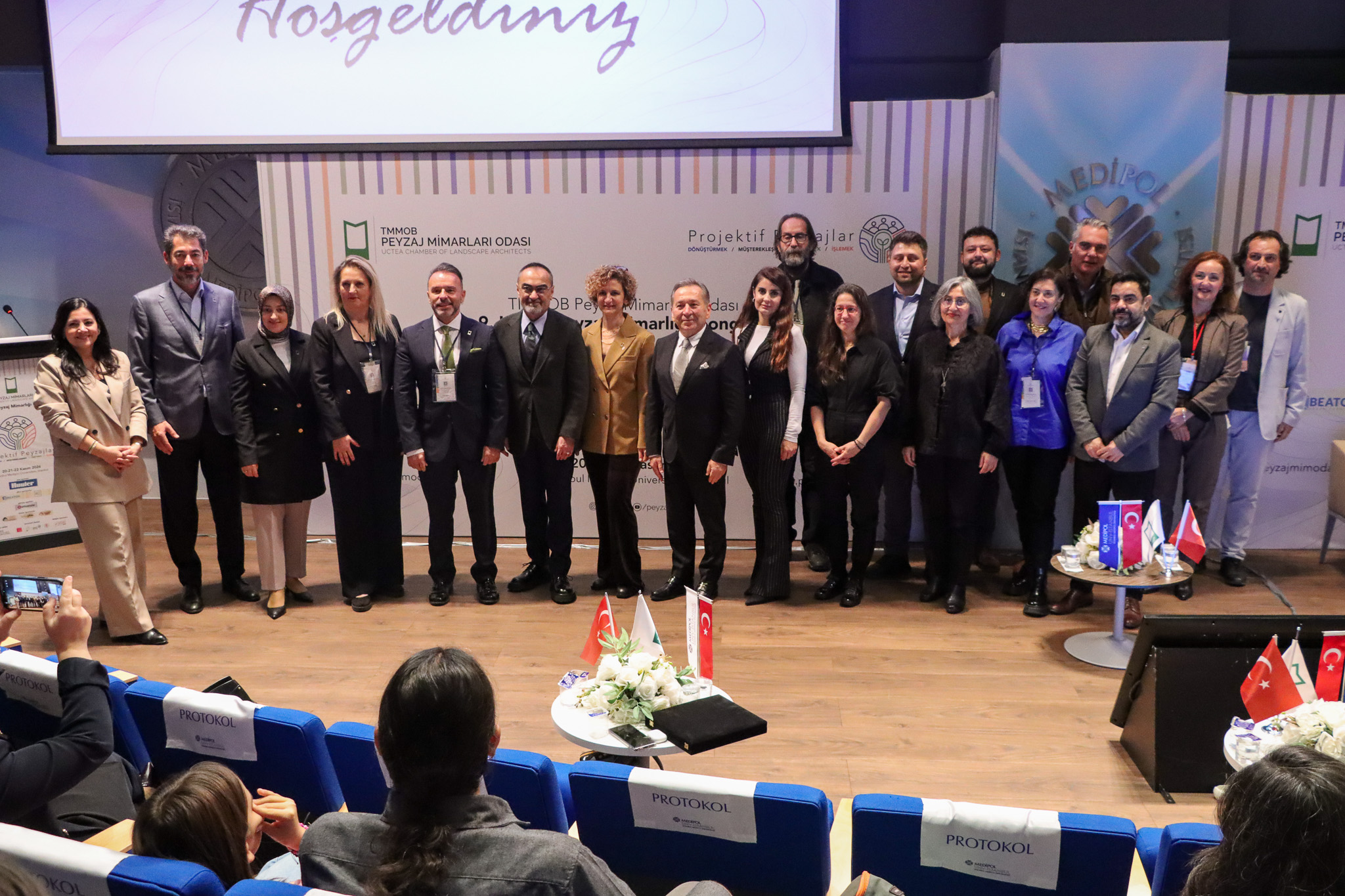
The ninth edition of the National Landscape Architecture Congress, organized every three years by the Chamber of Landscape Architects of the Union of Chambers of Turkish Engineers and Architects (TMMOB), was held on November 20–22, 2026, in collaboration with the Istanbul Medipol University School of Fine Arts, Design and Architecture and the Department of Urban Design and Landscape Architecture.
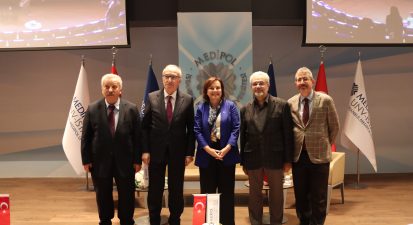
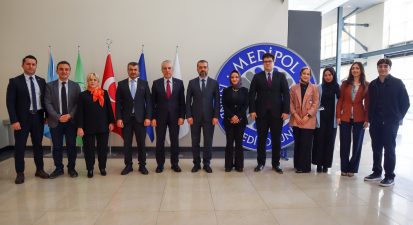
Held at the South Campus Conference Hall, the congress was attended by Prof. Hüseyin Attila Dikbaş, Dean of the School of Fine Arts, Design and Architecture; Assoc. Prof. Bahar Başer Kalyoncuoğlu, Head of the Department of Urban Design and Landscape Architecture at Istanbul Medipol University; landscape architect Kotchakorn Voraakhom, founder of LANDPROCESS; landscape architect Ceylan Belek Ombregt, partner at Martha Schwartz Partners (MSP); Özay Yerlikaya, President of the TMMOB Chamber of Landscape Architects; and Suat Yıldız, Secretary General of the Union of Municipalities of Türkiye. Other participants included Merve Eyüpoğlu Büyükkaracığan, Prof. Filiz Çelik, M. Cemil Aktaş, Pınar K. Aktaş, Elif Ağaoğlu Yıldırım, Zeynep Aslı Gürcan, Alev Perihan Gürbey, Assoc. Prof. Nilüfer Kart Aktaş, Nihan Sevinç Muşdal, and Hande Gündel.
The opening addresses were delivered by Assoc. Prof. Bahar Başer Kalyoncuoğlu, Prof. Hüseyin Attila Dikbaş, Özay Yerlikaya, and Suat Yıldız. The opening session highlighted the role of landscape architecture in climate change adaptation, water resource conservation, and the planning of resilient cities. Subsequent sessions explored the relationship between archaeological sites and society, the historical transformation of public green spaces, and the use of data in design processes through case studies.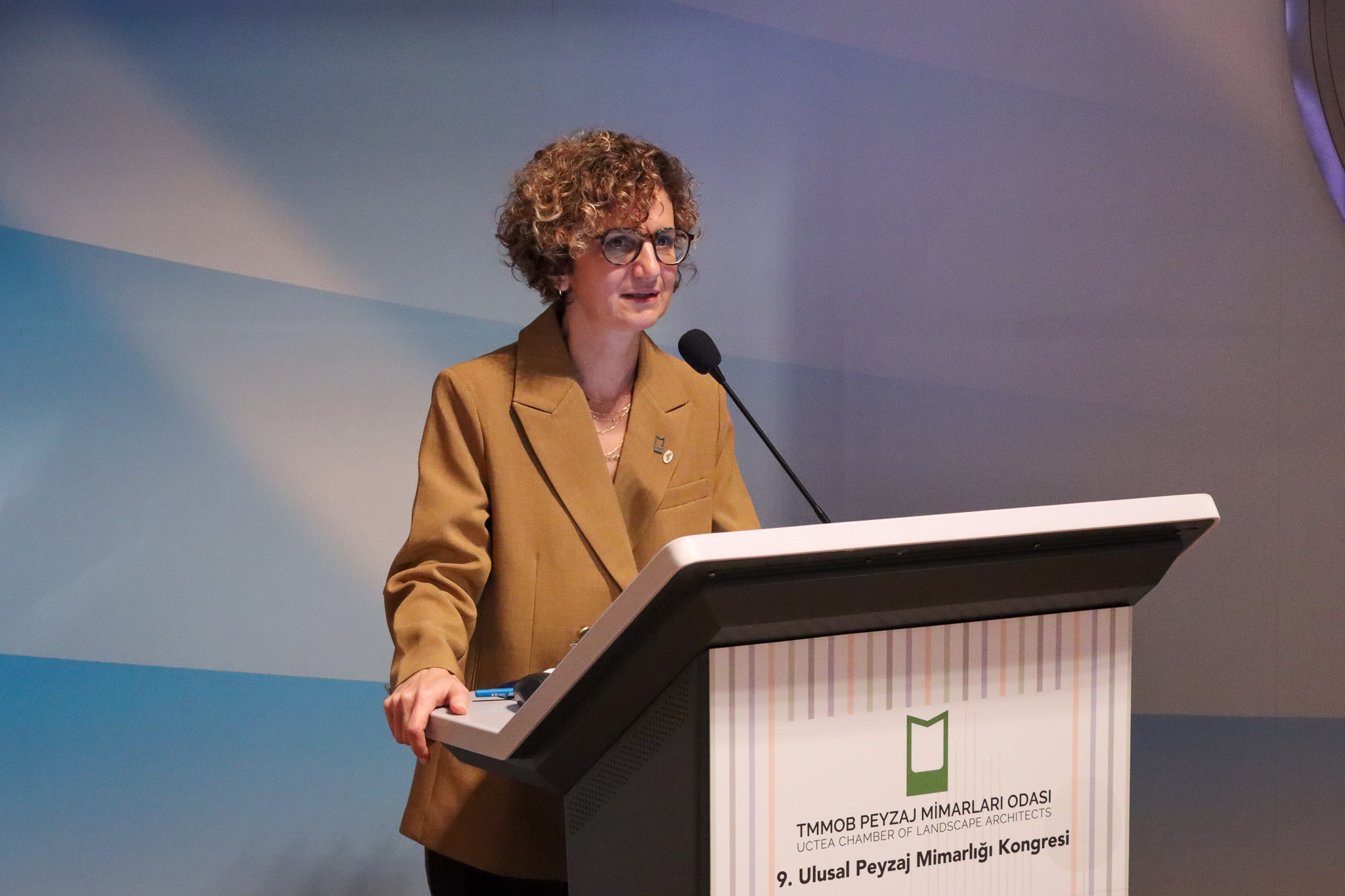
ASSOC. PROF. KALYONCUOĞLU: LANDSCAPE ARCHITECTURE IS UNDERGOING A MAJOR AWAKENING
Assoc. Prof. Bahar Başer Kalyoncuoğlu, Executive Chair of the Congress, noted that landscape architecture had long been perceived as an aesthetic and decorative discipline. However, global challenges such as climate change, biodiversity loss, and the food crisis have increasingly driven the profession toward a more ecological and functional approach.
“We are now beginning to understand that our need for shared public spaces and green areas is not a luxury, and that landscape is a fundamental building block of the urban ecosystem.” Kalyoncuoğlu said.
Emphasizing the importance of properly understanding the concept of xeriscaping and supporting this approach with quantitative data, Kalyoncuoğlu highlighted the significance of holding the congress immediately after COP31. She concluded her address with a quotation from Ian McHarg: “The conservation of nature is not a matter of sentiment but of logic.”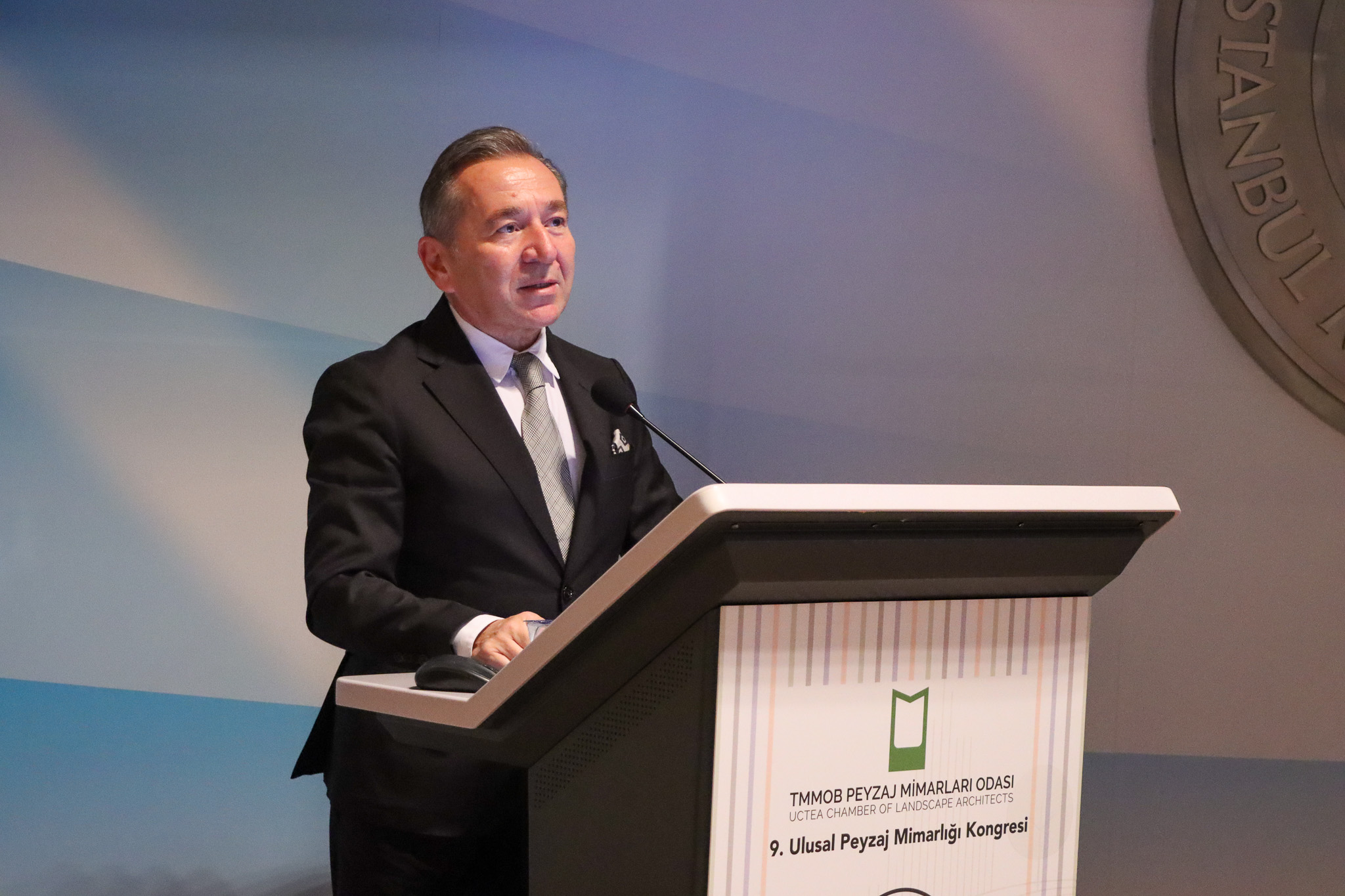
PROF. DİKBAŞ: LANDSCAPE MUST BE RECOGNIZED AS A SCIENTIFIC DISCIPLINE
Addressing a broad spectrum of areas ranging from the design of open and green spaces to ecological processes, social relationships, and technological opportunities, Prof. Hüseyin Attila Dikbaş, Dean of the School of Fine Arts, Design and Architecture, stated that landscape architecture has evolved into a scientific discipline that integrates these diverse fields.
“Creating resilient, healthy, and sustainable cities requires not separating nature from the built environment, but developing an approach to planning and design that integrates natural systems.” Dikbaş said.
Noting that the congress’s thematic pillars of “producing, commoning, transforming, and processing” address fundamental contemporary needs, Dikbaş emphasized the importance of considering the roles students could assume in the future in addressing these multilayered challenges.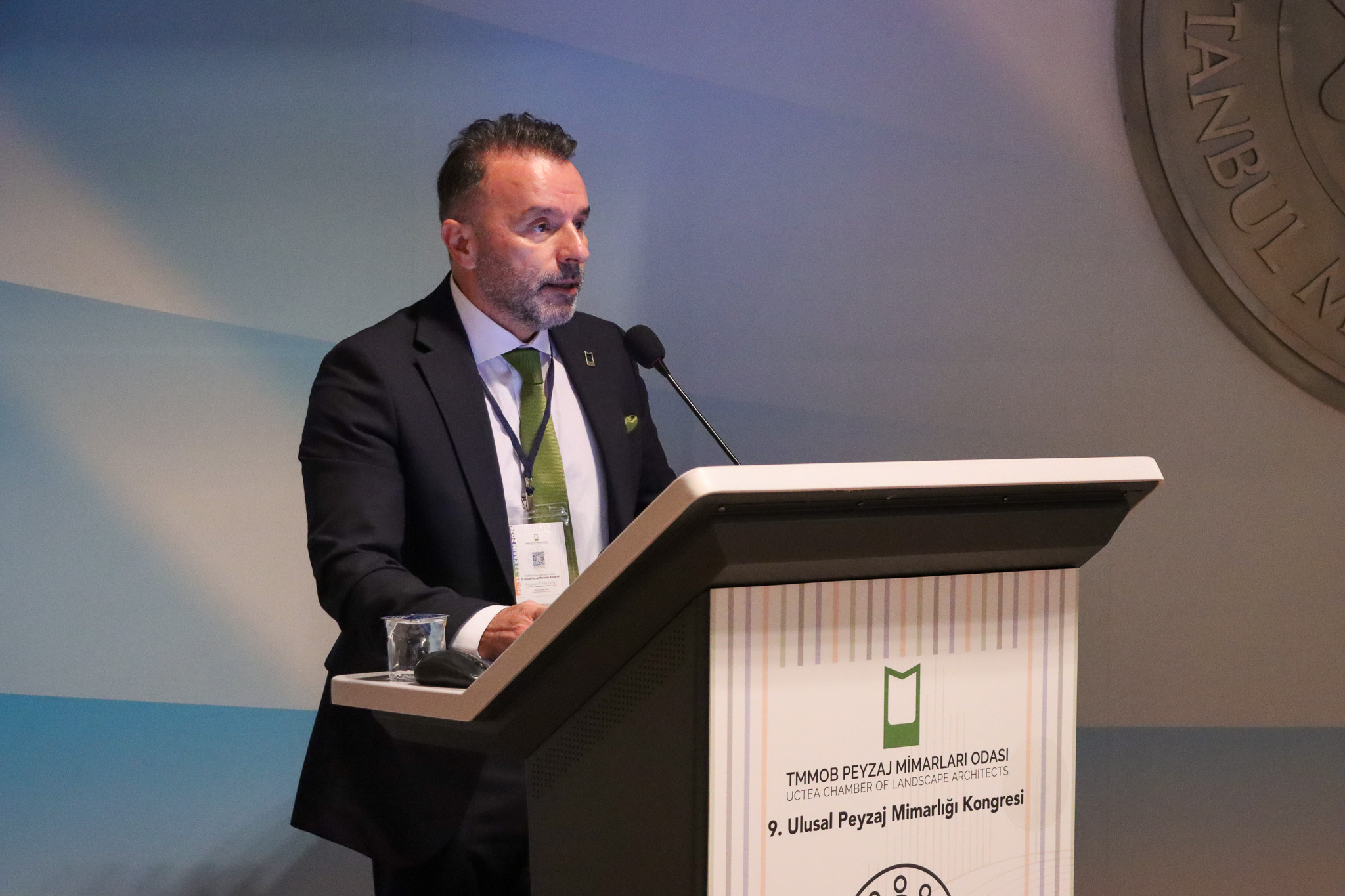
YERLİKAYA: LANDSCAPE IS LIFE, LANDSCAPE MUST COME FIRST
Addressing climate change adaptation, nature-based solutions, and urban resilience, all of which were discussed at COP31, Özay Yerlikaya, Honorary Chair of the Congress and President of the TMMOB Chamber of Landscape Architects, stated that progress in these areas could only be achieved through spatial planning and design decisions.
“Landscape is not merely a natural asset that needs to be protected or an element that meets the demand for green spaces. It is a fundamental system that connects water, soil, climate, biodiversity, and human health.” Yerlikaya said.
Emphasizing that landscape architecture should be recognized as one of the fundamental infrastructure systems of cities and placed at the heart of climate action, Yerlikaya concluded his address with the COP31 slogan of the International Federation of Landscape Architects (IFLA) and the American Society of Landscape Architects (ASLA): “Landscape is life, landscape must come first.”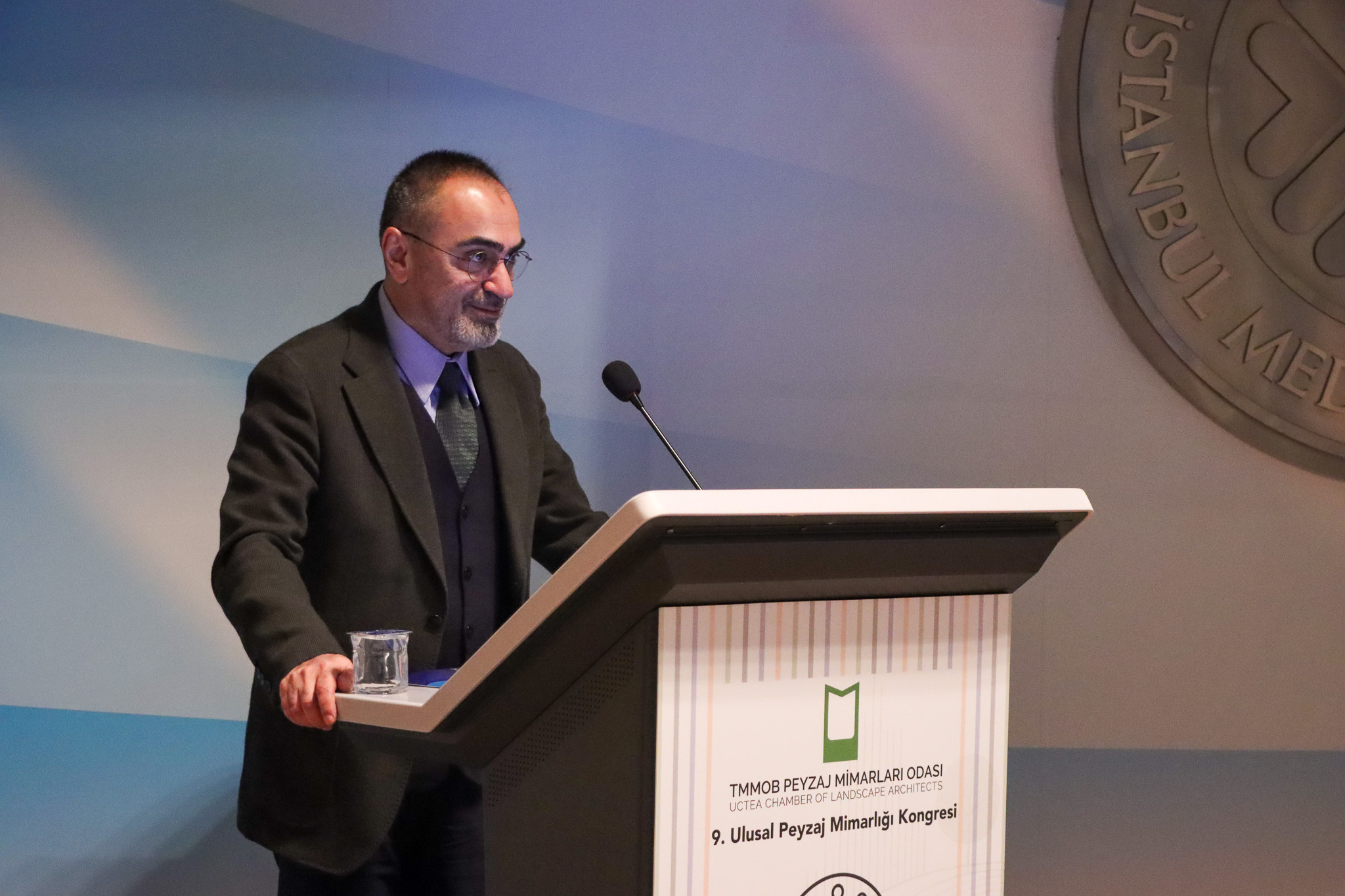
YILDIZ: LOCAL GOVERNMENTS HAVE A CRITICAL ROLE TO PLAY
Suat Yıldız, Secretary General of the Union of Municipalities of Türkiye, noted that the intensifying effects of climate change and growing pressure on water resources have made sustainable, water-centered landscape approaches increasingly important.
Discussing the Union of Municipalities of Türkiye’s contributions to COP31, Yıldız highlighted the importance of establishing ecological corridors, mitigating urban heat islands, implementing nature-based solutions, and expanding xeriscaping practices for local governments.
Addressing the steps needed to promote the widespread adoption of these approaches, Yıldız stated, “For this approach to become more widely adopted, legal and institutional frameworks must be clarified, administrative capacity strengthened, and interinstitutional cooperation enhanced.”
AKTAŞ: ARCHAEOLOGICAL SITES SHOULD BE APPROACHED AS LIVING LANDSCAPES
Delivering a presentation titled “From Traces of the Past to Landscapes of the Future: Archaeological Restoration and Landscape Interventions in Chalcedon and Ephesus” during the congress’s first session, landscape architect M. Cemil Aktaş explained that archaeological sites had long been regarded as untouchable remnants of the past, to be observed from a distance.
Emphasizing the need to approach these sites as living landscapes, Aktaş presented restoration and landscape intervention methods developed through the examples of Chalcedon and Ephesus. He explained that these methods could enable archaeological sites to be designed in ways that foster greater engagement with society.
PROF. ÇELİK: PUBLIC GREEN SPACES IN THE OTTOMAN EMPIRE REFLECT GENDER AND POWER RELATIONS
Examining Ottoman-era conceptions of public space through green spaces, Hacettepe University faculty member Prof. Filiz Çelik discussed the examples of Gülhane Park, the Sadabad Recreation Area, and the gardens of Yıldız Palace in her presentation.
Çelik emphasized that these spaces should be evaluated not only in terms of their physical characteristics but also in relation to how gender roles and religious and political authority were reflected in their spatial organization.
“In Ottoman cities, public space largely took shape around mosque-centered complexes and the courtyards and gardens that developed around them.” Çelik said. She also highlighted the transformation in the ways public green spaces were used during the period extending from the Tanzimat reforms to the establishment of the Republic.
YILDIRIM: HISTORICAL LAYERS AND DATA-DRIVEN APPROACHES ARE ESSENTIAL IN YENİKAPI
Elif Ağaoğlu Yıldırım, a research assistant and doctoral student in the Department of Landscape Architecture at Istanbul Technical University (ITU), examined the transformation of Yenikapı through urban design competitions held in 2011 and 2020.
She explained that the perception of Yenikapı had shifted from an urban image and metropolitan center toward a conception of public space integrated with archaeological heritage. Ağaoğlu Yıldırım noted that this shift influenced the scope of design interventions and the competition program, while also reshaping approaches to participation.
Describing urban design competitions as “a source of research into both realized transformations and unrealized urban futures” Yıldırım emphasized that cultural memory and living landscape components should be considered together when incorporating traces of the past into design.
Highlighting the importance of prioritizing quantitative and mathematical data when collecting ecological and environmental information at the outset of a project, Yıldırım concluded her presentation by emphasizing the need to monitor outcomes through performance management, measurement, and evaluation after project completion.
Last Update : 24/11/2026 - 15:02