Teachers outperform AI in English language feedback
A study co-authored by Lecturer Mustafa Yolum from the General Coordination Office of Foreign Languages at Istanbul Medipol University examined how 80 university students perceived feedback received from either their teachers or ChatGPT during English-speaking activities. Teacher feedback received higher ratings across all four areas examined. While students appreciated ChatGPT’s ability to help them quickly identify their mistakes, they valued their teachers’ understanding of what they were trying to communicate and their encouraging approach to delivering feedback.
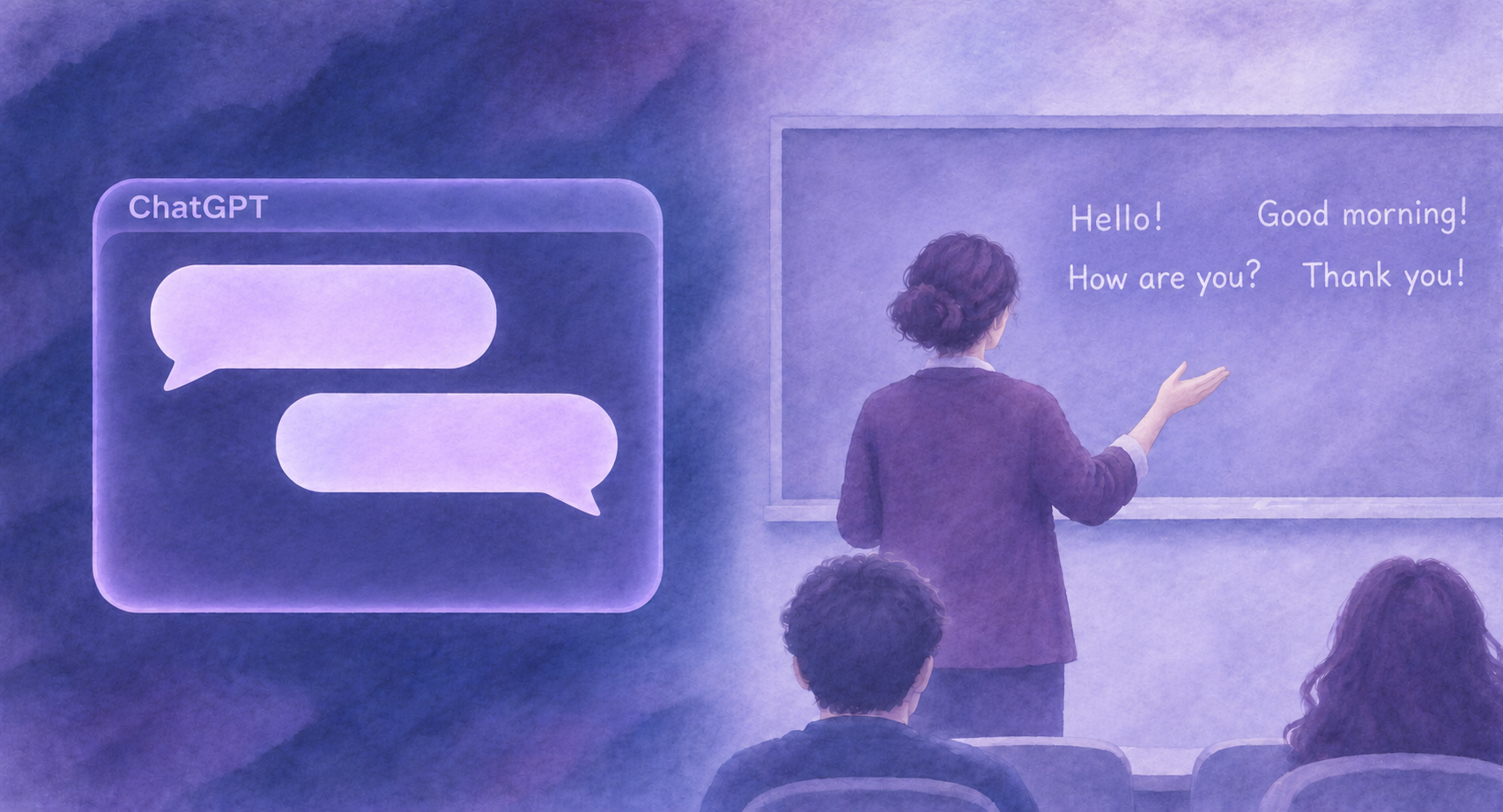
Who would you prefer to correct your mistakes when speaking English? Published in the journal English for Specific Purposes, the study titled “Learner perceptions of AI-generated feedback on L2 speaking in the ESP context”, co-authored by Lecturer Mustafa Yolum from the General Coordination Office of Foreign Languages at Istanbul Medipol University, examined how useful students found the feedback provided by their teachers and ChatGPT during speaking activities in English for Specific Purposes (ESP) courses, as well as how confident they felt about applying the suggestions they received.
Teacher feedback received an average rating of 3.96 out of 5, compared with 3.24 for ChatGPT-generated feedback. Students reported that ChatGPT helped them quickly identify errors in grammar and word choice. Those who preferred teacher feedback highlighted their teachers’ ability to consider the context of a conversation, explain corrections clearly, and encourage them to speak.
80 STUDENTS RECEIVED FEEDBACK THROUGH TWO DIFFERENT METHODS OVER FOUR WEEKS
Conducted at a foundation university in Istanbul, the study involved 39 students from the Logistics Management Program and 41 students from the Civil Aviation and Cabin Services Program. Both groups participated in classroom discussions on weekly topics as part of their compulsory English for Specific Purposes courses, which are designed to prepare students to communicate in English within their respective professional fields.
The discussions involving Logistics Management students were transcribed using Microsoft Teams. After the transcripts had been reviewed, ChatGPT generated written feedback on the students’ speaking performance. The suggestions focused on areas such as expressing ideas in greater detail, improving word choice, and correcting grammatical errors. Students in the Civil Aviation and Cabin Services Program, meanwhile, received feedback directly from their teachers during classroom discussions.
HOW DID STUDENTS EVALUATE THE FEEDBACK THEY RECEIVED?
At the end of the four-week period, each student completed a 20-item questionnaire evaluating the feedback method used in their respective group. Both groups responded to statements addressing the same aspects of feedback. For example, while one group assessed whether the suggestions provided by their teachers supported their learning, the other rated the same statement in relation to ChatGPT-generated feedback. Similarly, students indicated whether they considered it their own responsibility to act on the suggestions they received.
The questionnaire covered four areas. The first two assessed how useful students found the feedback and the extent to which they felt responsible for applying the suggestions. The social awareness section examined how effectively feedback helped students understand the impressions they made on others. The self-efficacy section assessed how confident students felt in their ability to understand and act on the feedback they received.
The researchers subsequently conducted face-to-face interviews with six students from each group, involving a total of 12 participants. During these interviews, students discussed which suggestions they found useful, how the tone of the feedback affected them, and why they trusted or questioned the guidance they received.
TEACHER FEEDBACK RECEIVED HIGHER RATINGS ACROSS ALL FOUR AREAS
On the five-point questionnaire, the group receiving teacher feedback achieved an overall mean score of 3.96, compared with 3.24 for the group receiving ChatGPT-generated feedback. Teacher feedback received higher ratings across all four areas, with all differences found to be statistically significant.
The largest difference in mean scores was observed in social awareness, where the teacher feedback group scored 3.94, compared with 2.87 for the ChatGPT group. The highest mean score within the ChatGPT group was 3.57, recorded for perceived feedback usefulness. During the interviews, students explained that artificial intelligence was particularly helpful in identifying shortcomings in their grammar, word choice, and speaking fluency.
WHAT DID STUDENTS VALUE WHEN RECEIVING CORRECTIONS?
During the interviews, some students found it helpful that ChatGPT explicitly identified their mistakes and provided examples of how they could express the same ideas more effectively in English. Some also reported feeling less pressure when receiving feedback from a software tool. However, others found the same direct approach rather harsh. One student explained that seeing each mistake listed individually was initially discouraging but subsequently motivated them to study harder.
When discussing teacher feedback, students valued their teachers’ ability to understand what they were trying to communicate and explain their suggestions through real-life examples. Some reported remembering and applying corrections involving vocabulary or expressions specific to their professional fields in subsequent conversations. Others noted that positive comments from their teachers made them more willing to speak.
Students’ experiences also varied in terms of trust. Some reported that ChatGPT occasionally overlooked subtle nuances in their speech. Meanwhile, among those who trusted their teachers’ expertise and familiarity with their individual needs, some found feedback addressed to the entire class too general and expressed a preference for more personalized guidance.
THE STUDY OFFERS A NEW PERSPECTIVE ON FEEDBACK IN ENGLISH FOR SPECIFIC PURPOSES
Much of the existing research on AI-generated feedback focuses on writing skills, general English language instruction, or the technical performance of AI tools. By comparing teacher and ChatGPT-generated feedback in classroom discussions within English for Specific Purposes courses, Yolum’s study contributes empirical evidence to a relatively underexplored area of research.
The study’s distinctive contribution lies in examining three interconnected aspects of the learner experience: how useful students perceive feedback to be, how much they trust it, and how prepared they feel to act on it.
The researchers suggest that future studies could explore a model in which artificial intelligence helps students quickly identify their mistakes, while teachers contextualize feedback according to the purpose of the conversation and individual learning needs, offering encouragement throughout the process.
How this combined approach might affect speaking proficiency could be assessed through longer-term studies that follow students over extended periods and directly measure their speaking performance.
Last Update : 27/11/2026 - 16:54