Medipol ranks among Türkiye’s Top 30 universities for TQF logo eligibility
Istanbul Medipol University ranked among the top 30 out of 162 universities in Türkiye based on the number of academic programs authorized to use the Turkish Qualifications Framework (TQF) logo. Vice President Prof. Recep Öztürk received a commemorative plaque on behalf of the University at a ceremony held in Ankara.
International recognition of university education requires not only the recognition of diplomas but also a clear understanding of the knowledge, skills, and competencies those qualifications represent. The Turkish Qualifications Framework (TQF) contributes to this process by enabling qualifications acquired through higher education to be defined and compared according to common standards. Istanbul Medipol University ranked among the top 30 of 162 universities evaluated nationwide in terms of the number of programs authorized to use the TQF logo.
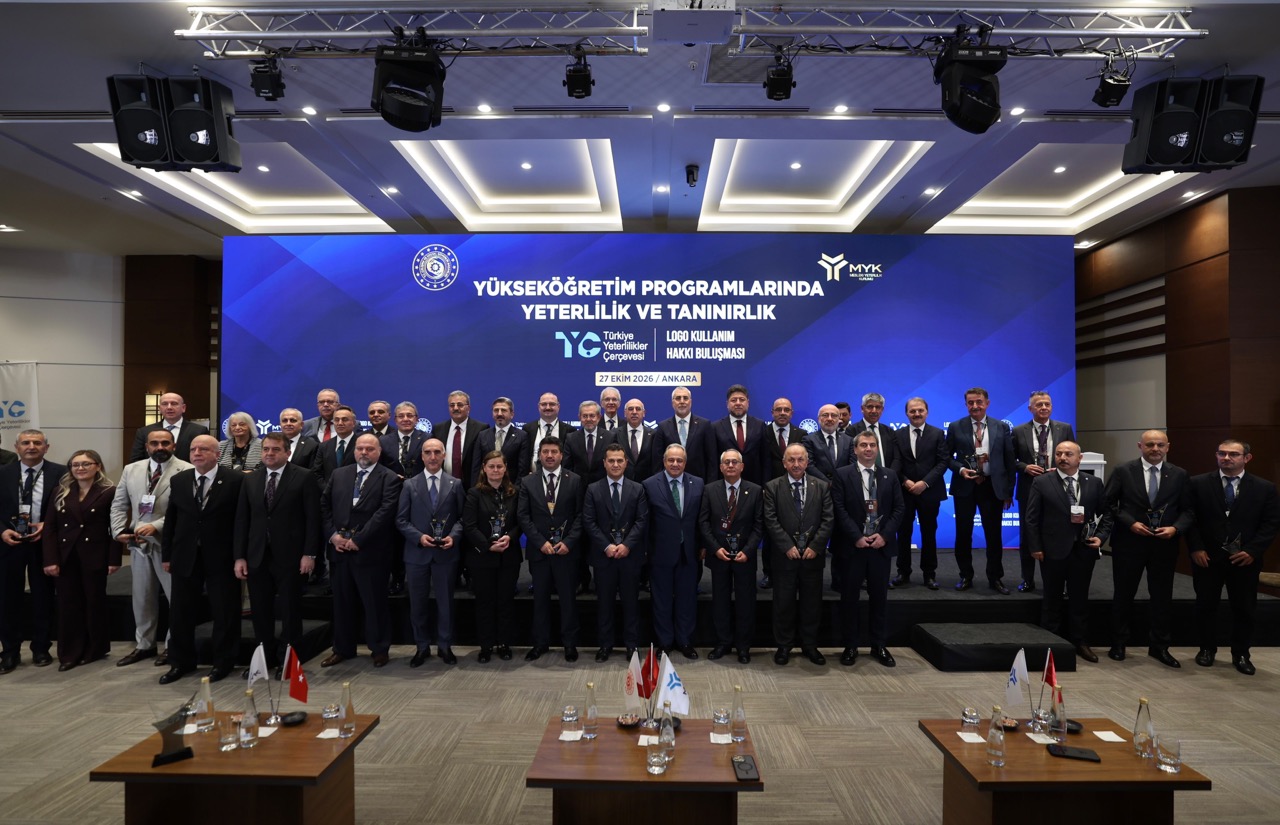
Following the 21st Ordinary General Assembly of the Vocational Qualifications Authority, an event titled “Qualifications and Recognition in Higher Education: Turkish Qualifications Framework (TQF) Logo Usage Rights Meeting” was held in Ankara on October 27, 2026.
During the ceremony, commemorative plaques were presented to the 30 universities with the highest number of programs authorized to use the TQF logo. At the event, attended by Minister of Labor and Social Security Prof. Vedat Işıkhan, Istanbul Medipol University Vice President Prof. Recep Öztürk received the plaque on behalf of the University.
16 PROGRAMS HAD PREVIOUSLY BEEN GRANTED THE RIGHT TO USE THE TQF LOGO
During the first six months of 2025, 16 programs across various academic units at Istanbul Medipol University were granted the right to use the TQF logo following evaluations conducted by the Turkish Qualifications Framework Board. The use of the TQF logo on graduation documents was approved for programs spanning engineering, health sciences, architecture, business, and management.
The 16 programs granted the right to use the TQF logo were Banking and Insurance, Computer Engineering (English), Biomedical Engineering (English), Electrical and Electronics Engineering (English), Aviation Management, First and Emergency Aid (English), First and Emergency Aid, Logistics Management (English), Architecture, Accounting and Tax Applications, Medical Laboratory Techniques (Evening Education), Medical Laboratory Techniques, Medicine (English), International Trade and Finance (English), Applied English and Translation (English), and Management Information Systems (English). The decision confirmed that these programs met the quality assurance criteria established under the TQF.
WHAT IS THE TQF, AND HOW DOES IT BENEFIT STUDENTS AND GRADUATES?
The Turkish Qualifications Framework (TQF) is a national system that enables qualifications acquired through education and training to be defined, classified, and compared according to established standards. Aligned with the European Qualifications Framework (EQF), the TQF aims to make qualifications obtained in Türkiye more transparent, understandable, and comparable internationally.
The TQF logo may be included on diplomas and other qualification documents associated with programs that meet the required quality assurance conditions and have been incorporated into the framework. For students, this helps establish a clear connection between the knowledge, skills, and competencies acquired during their education and recognized qualification standards.
For graduates, the TQF logo helps educational institutions and employers abroad better understand the qualifications they hold. It also supports the transparent and comparable presentation of qualifications, particularly in applications for postgraduate education, international employment, and professional mobility.
However, the TQF logo does not mean that a diploma is automatically recognized abroad or that its holder is automatically granted professional equivalency. Rather, the framework aims to make qualifications more understandable by aligning them with internationally comparable standards.
Last Update : 28/10/2026 - 14:52